





For the longest time, I believed the phrase “You are what you consume” applied only to the food I ate. But over time, I’ve realized that it’s not just what we put into our bodies that shape us—it’s what we feed our minds, too. Every piece of media we engage with, from the news articles we read to the music we zone out to, acts as a mirror, quietly shaping how we see ourselves and the world around us. We don’t just consume media; we internalize it, subconsciously carrying its influence in our thoughts, feelings, and actions.
I spend an average of 5 hours and 27 minutes scrolling on my phone each day. While that number may seem high, it’s actually lower than the average number of hours that teenagers spend, which, according to Common Sense Media, is around 7 hours and 22 minutes a day, not including time spent on schoolwork. By the time we turn 20, we’ve spent around 7.5 years of our lives staring at a rectangular screen. Media becomes more than something we engage with; it turns into an alternate reality we exist within. And sometimes, the world inside our screens feels more real than the one outside of them.
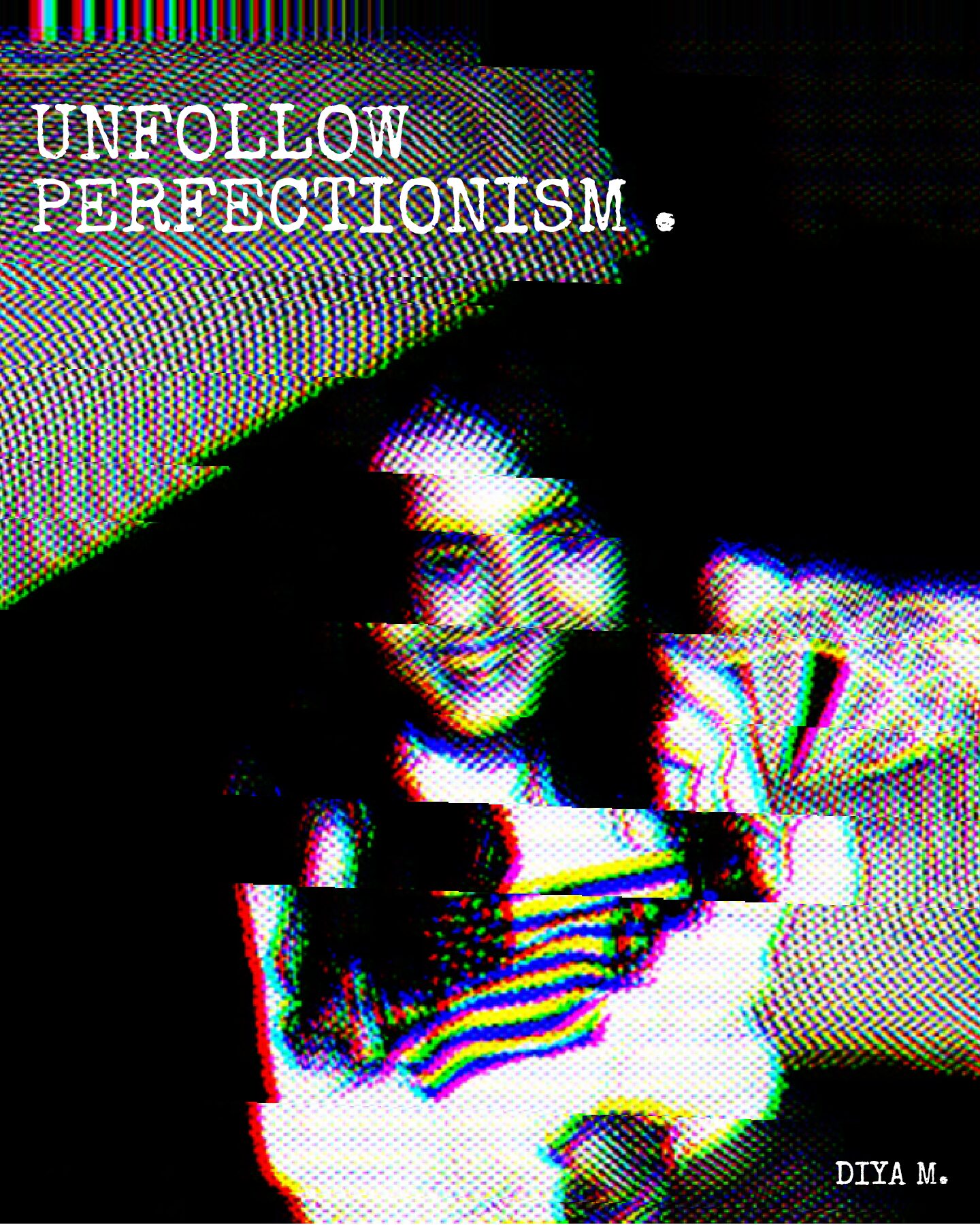
Scrolling through endless “wellness” influencers, I was captivated by their perfect lifestyles. I told myself I was merely watching them for inspiration, but each scroll seemed to highlight something else I lacked. Somewhere along the way, inspiration turned into comparison. The media I once used for entertainment had rewritten how I saw myself, etching its version of perfection onto the person in the mirror.
I wish I could say I woke up one day and realized the harm in it all, but it wasn’t that simple. However, just as one-click had opened the floodgates to a cycle of harmful videos, another click pulled me out. Instead of chasing curated lives, I began following creators who showed their unfiltered moments: the slip-ups, the hard days, and the challenges. Engaging with online communities like Channel Kindness, ANAD (National Association of Anorexia Nervosa and Associated Disorders), and eventually founding Project EDSA, I found comfort in the reminder that stories aren’t meant to be polished or perfect—they’re meant to be honest, even if that honesty is a little messy. Slowly, as my feed shifted from chasing change to embracing acceptance, my mindset did too. I realized I was never meant to chase perfection, but rather pursue progress, welcome growth, and offer grace to myself along the way.
My phone used to be a trusted friend, a confidant I turned to daily, who fed me a constant stream of white lies disguised as the truth. But over time, I came to see this so-called “friend” for what it really was: a curator of illusion, only ever showing what’s meant to be seen: the polished scene in front of the curtain. Social media is just a highlight reel, and we never truly know what’s happening backstage. Since then, I’ve broken my friendship with the media and pursued a stronger, far more meaningful one instead—with myself, my body, and my mind.
I can’t change the media landscape overnight, but I can change the way I engage with it. We’re taught to care for our bodies, but we often forget that our minds deserve just as much care. Both are essential, and both are worthy of compassion, love, and unapologetic acceptance.