

I walked into the memory care facility clutching my flute, nervous energy making my palms sweat. I was just a high school student trying to do something meaningful, unsure if anyone would even want to listen.
As I began setting up in the common room, an elderly man looked up from his chair. His eyes were kind but distant, the way eyes get when the mind wanders through fog.
“I used to play clarinet too,” he said simply.
“Really?” I smiled. “That’s wonderful.”
“Mhmm.” He nodded, then added almost as an afterthought, “I performed at Carnegie Hall.”
The words hung in the air. Carnegie Hall. This man sitting before me in worn slippers, struggling to hold onto the threads of his own story, had once stood on one of the world’s most prestigious stages. His name was Don.
That afternoon, I played for Don and the other residents. The notes floated through the air, and I watched faces change. Some closed their eyes. Others swayed gently. One woman sang along to a melody she hadn’t heard in decades. In those moments, I glimpsed something profound. Music reaches places that words cannot.
But it was Don’s quiet revelation that haunted me. How many stories like his existed in rooms just like this one? How many artists, musicians, dancers, and dreamers sat in silence while the world rushed past their windows, never knowing the magnitude of lives lived?
The experience planted a seed. What if this wasn’t just a one-time visit? What if we created something bigger, something that honored the soul behind the fading memories?
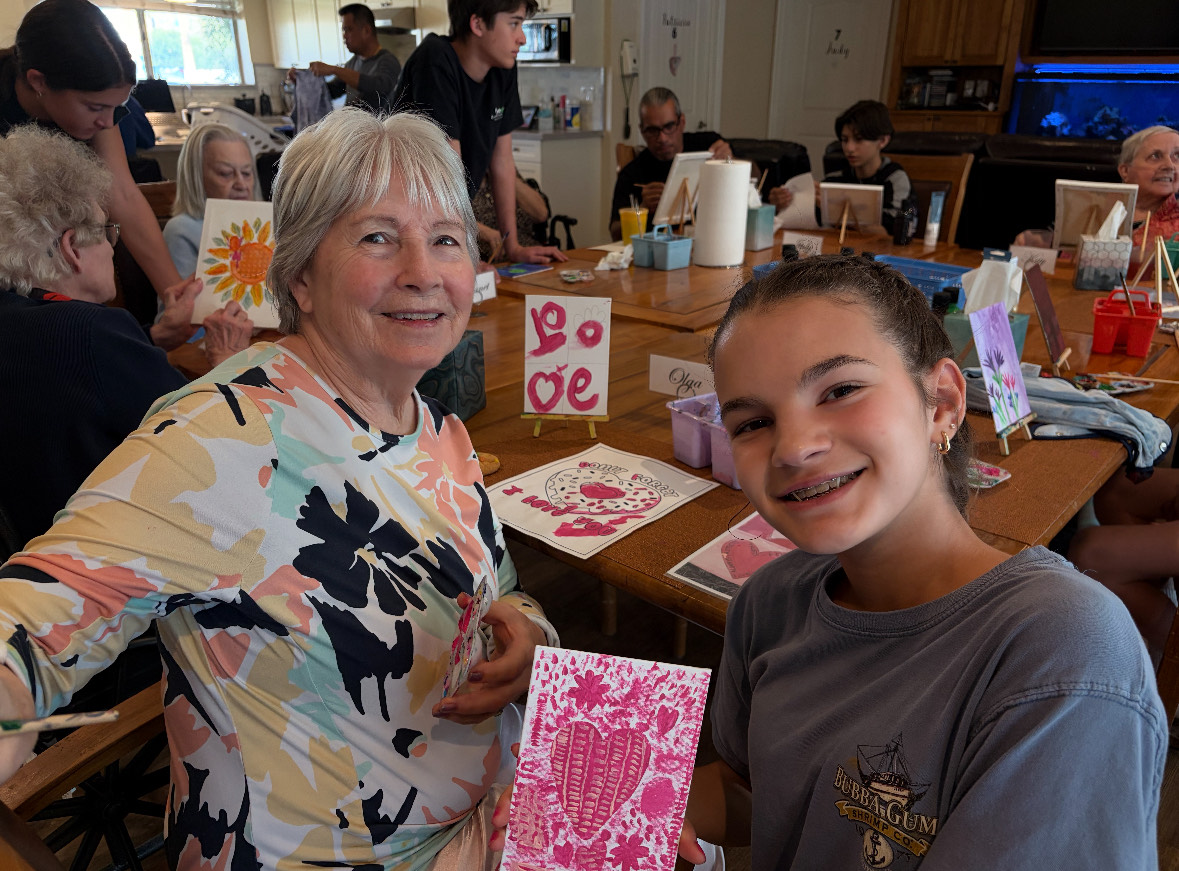
My co-founder Gage and I started Our Ode To You during our senior year of high school. We gathered student musicians, dancers, and artists who believed that everyone deserves to be seen, heard, and celebrated. Our approach was simple but intentional: arrive with instruments and art supplies, create a multi-sensory environment of drawing and music, and most importantly, create with residents rather than perform at them.
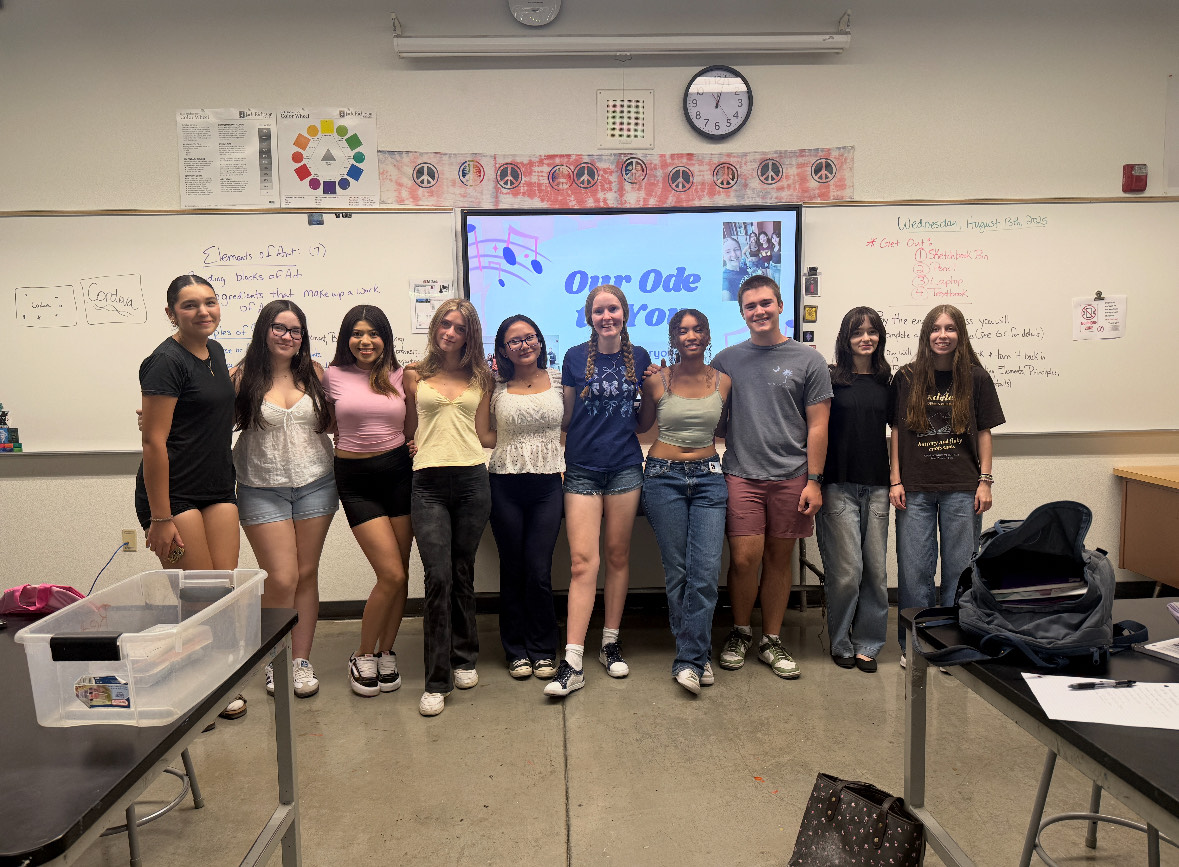
We quickly learned that we weren’t just giving. We were receiving. Volunteers heard forgotten melodies from the 1940s that no history book captures. They witnessed stories breathe through living voices. They found mentors in the very people society had shelved as “too far gone.”
Weeks turned into months. Our visits became regular, anticipated. Don was often there, watching our performances with that same distant kindness. He’d mentioned clarinet that first day, but I’d never seen him play. His instrument sat somewhere in his past, untouched for twenty years. Dementia doesn’t care about pedigree.
Then came the day we brought extra instruments to his facility.
I brought my sister’s old and unused violin in the room. Don’s eyes landed on it. His weathered hands reached out, trembling slightly as they wrapped around the neck. For a moment, nothing happened. Then his fingers found their positions, muscle memory intact from thousands of hours of practice decades ago, ready to tune.
Then, he began to play.
Perfectly. Beautifully. Tears streamed down his face as music reconnected him to his core identity, to the artist he’d always been beneath the fog of dementia. His fingers remembered what his mind had forgotten. The room fell silent except for the soaring notes of his violin, and we all witnessed proof that that same person is still there, waiting for the right key to unlock their spirit.
That moment crystallized everything we believed. People with dementia aren’t empty vessels. They’re libraries of human stories, each spine holding decades of wisdom, love, heartbreak, and triumph. They’re not defined by what they’ve lost but by what remains, the eternal spark that music and art can still ignite.
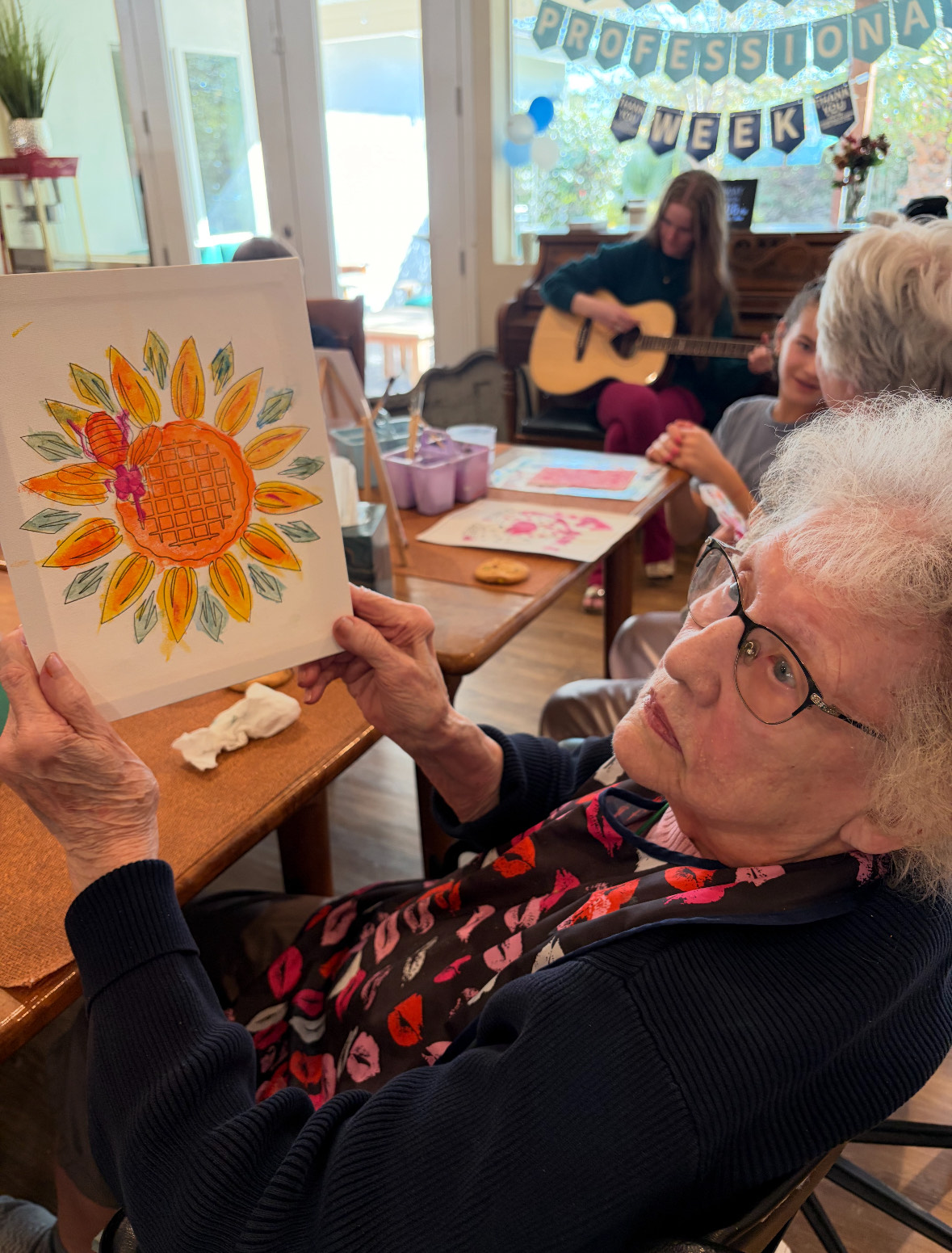
Three years later, Our Ode to You has grown into a movement. Over one hundred teen volunteers have brought music and creativity to more than one thousand elderly residents across multiple states. We’ve watched grandmothers who haven’t spoken in months suddenly sing along to familiar songs. We’ve seen isolated seniors light up during painting sessions, their hands moving with surprising grace as colors blend on canvas. We’ve witnessed intergenerational friendships bloom between teenagers and octogenarians who, on paper, have nothing in common but who discover they have everything in common.
The beauty of this work is its reciprocity. Our volunteers arrive thinking they’re helping, but they leave transformed. They learn that aging doesn’t diminish worth. They discover that wisdom isn’t found only in textbooks but in the lived experiences of people who’ve weathered wars, raised families, loved and lost and loved again. They understand, perhaps for the first time, that every person has inherent dignity regardless of cognitive ability.
Modern memory care often forgets the very thing it should protect: the soul behind the memories. But in quiet rooms across Arizona and beyond, something different is happening. Young people with instruments and paintbrushes are showing up, week after week, creating spaces where elders with dementia can still dance, still create, still matter.
Because here’s the truth we’ve learned: society treats dementia like an ending, but we’ve witnessed it as a transformation. The essence of who someone is, their capacity for joy and connection and artistic expression, doesn’t disappear. It just needs the right invitation to emerge.
Every session we hold is an ode. To resilience. To memory, both lost and found. To the revolutionary act of seeing people as fully human regardless of what their minds can or cannot do. To the healing power of intergenerational connection in a world that too often segregates young from old, able from disabled, “productive” from “forgotten.”
Don still plays sometimes. Not every session, not predictably, but when the moment is right and the music calls to him. And when he does, we’re reminded why we do this work: because everyone deserves to feel like themselves again, even if just for the length of one perfect song.
For High School Students: You can make a direct impact by hosting music and arts sessions at memory care facilities in your community. Whether you play an instrument, paint, dance, or simply want to spend time creating connections with seniors, your presence matters. Even better, consider starting an Our Ode to You chapter at your high school to build a lasting program that continues year after year. This will all be paid for!
For College Students and Adults: Mentor young volunteers, help with transportation to facilities, or use your professional skills to support our operations. Music therapists, gerontologists, and healthcare professionals can provide training and guidance to our student volunteers.
For Memory Care Facilities: Partner with us to bring complimentary programming to your residents. Our sessions require minimal setup and create meaningful enrichment opportunities.
For Everyone: Share our story. The more people understand that dementia doesn’t erase personhood, the more we shift how society values our elders. Follow our journey and spread the word about intergenerational connection.
Learn more and get involved at ourodetoyou.org
Follow us on social media:
Contact us directly: [email protected]