


Growing up in the heart of New Delhi, I have long been a witness to the dual nature of the law. On one side stands the majestic, intricate machinery of justice—stately buildings and leather-bound statutes that define the order of our society. On the other lies a profound, silent gap: a disconnect between the rights written in books and the lived reality of the citizens they are meant to protect. For many young people in India, the legal system can feel like an impenetrable fortress, guarded by a language known as “legalese” that is designed to exclude rather than empower.
This realization was the spark for Lex Lumina, which I founded in December 2024. My vision was to create a platform where legal literacy is no longer a luxury for the few, but a fundamental tool for the many. The name itself—Law and Light—reflects my core belief: that when we illuminate the law, we banish the shadows of exploitation and inequality. Our mission is to demystify the frameworks that govern our lives, turning complex acts—from the POCSO Act to basic Constitutional guarantees—into accessible, actionable knowledge for the youth.
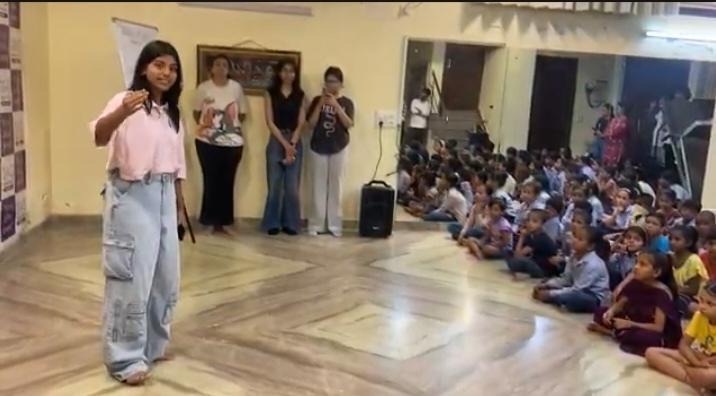
To date, Lex Lumina has been rooted in essential on-the-ground advocacy. We have focused on direct engagement, working within communities to ensure that legal awareness isn’t just a digital concept, but a physical reality. However, we are now standing at a pivotal turning point. While our heart remains in grassroots work, we are preparing to expand our reach into the “Gen Z world”—leveraging digital platforms to create a borderless movement for legal equity. We are moving beyond the classroom and into the digital spheres where our generation lives, speaks, and organizes, ensuring that legal empowerment is just a click away for every young person.
My journey toward this mission has been shaped by a mosaic of advocacy. Whether I was serving as a Water Guardian for WaterAid India, addressing environmental justice, or collaborating with the Youth Health Advisory Council to navigate the intersections of policy and well-being, the lesson was always the same: silence is a symptom of a lack of knowledge. We cannot advocate for ourselves if we do not know the vocabulary of our own rights.
A major milestone in this journey has been our recent selection for the International Children’s Peace Prize fund by KidsRights. Being recognized on such a prestigious global stage is not just a personal honor, but a powerful validation of the urgency of our mission. This international support provides us with the resources and the global platform to amplify our message, proving that the struggle for legal literacy in New Delhi resonates with the universal fight for children’s rights and peace worldwide.
Through Lex Lumina, we are building more than just a resource; we are fostering a new generation of “citizen-advocates.” We believe that the youth of India should not just be passive observers of the law, but active participants in its evolution. Together with Empowered Girlhood NCR we have been organising workshops and seminars for children to provide them with legal literacy. This work is the foundation of my own aspiration to serve in the Indian judiciary. My path toward becoming a criminal advocate and eventually a judge is fueled by these stories of grassroots empowerment and the unwavering belief that justice is only true when it is accessible.
By bridging the gap between the courtroom and the classroom—and now the digital world—we are ensuring that the next generation possesses the power to change society from the inside out. In a world of complex power dynamics, the truth of the law remains our greatest shield.