

“AI is the only accessible way to make art.”
Some of your favorite well-known, and yes, disabled artists, would fervently disagree.
I’m a disabled artist, and you may not know this, but there have been incredible disabled artists throughout history. The claim that “AI is the only accessible way to make art” could not be further from the truth. This statement is not only blatantly untrue, but it also insults the legacy of incredible disabled artists through history, as well as the ability of many disabled artists thriving and creating today. Some of the world’s most well-known artists were disabled and adapted their processes to create.
Frida Kahlo
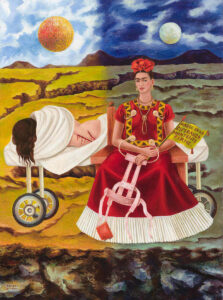
Tree of Hope, Remain Strong, 1946 by Frida Kahlo
Frida Kahlo was an incredibly skilled and prolific Mexican painter who was, yes, disabled! Frida Kahlo had Polio as a child and then became seriously injured in a bus accident at 18. It was in bed, caring for herself, dealing with severe chronic pain and persisting medical problems, that she reunited with her childhood love of art. Art was accessible and necessary to Frida. She used a mirror above her bed and a special easel to paint lyinglaying down. Her art covered gender, class, and race in Mexican society, and her personal identity as a queer disabled Mexican woman.
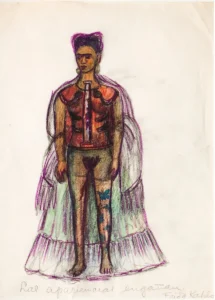
Frida Kahlo, Appearances Can Be Deceiving, no date. Charcoal and pencil on paper, 11 ⅜ x 8 ¼ in. (29 x 21 cm). Museo Frida Kahlo REPRODUCTION AUTHORIZED BY THE NATIONAL INSTITUTE OF FINE ARTS AND LITERATURE, 2020
Ludwig van Beethoven
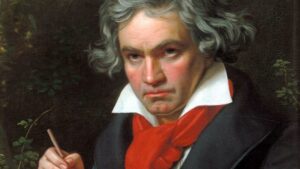
Ludwig van Beethoven. Painted by Joseph Karl Stieler around 1819–1820
You know Beethoven. Not the dog. The dog’s namesake. Ludwig Van Beethoven. Infamous German composer and pianist known for such songs as ” Don Don Don ” and Piano Sonata No. 21. Beethoven was deaf. He reportedly first noticed his hearing loss in his 20s, and by the time he was in his mid 40s, he was completely unable to hear and would communicate through passing notes. He also reportedly had chronic abdominal pain, which people now speculate may have been inflammatory bowel disorder, among many other things. It was the late 18th century, and healthcare wasn’t awesome. Thought I’d throw that in there. His deafness notably impacted his writing and his ability to play. He was deaf, and he continued to perform and write some of his most famous pieces, including the Ninth Symphony.
Van Gogh
You know Van Gogh. Vincent Van Gogh. Or you should. Sunflowers. Starry Night. Lilies. This man.
He painted this picture of himself.
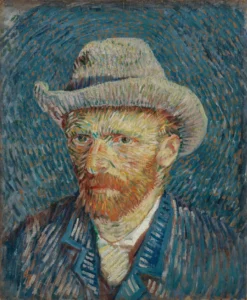
Vincent van Gogh (1853-1890)
He painted some of the most beautiful and influential art of all time while combating disabling mental illness and seizures, which doctors believe to be caused by temporal lobe epilepsy. I know very well how Vincent struggled. Especially as a die-hard Doctor Who fan, due to this incredibly accurate and devastating representation.
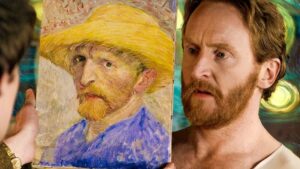
Doctor Who, Series 5 Episode 10 “Vincent and the Doctor”
Unfortunately, Van Gogh’s paintings were not received well while he was alive. Nevertheless, he continued in his passion. His disability, like the others I described before, caused him to experience the world through a unique perspective.
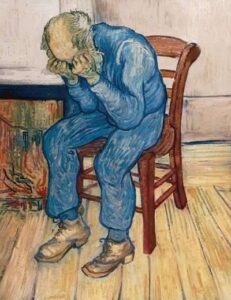
Sorrowing Old Man (‘At Eternity’s Gate’) by Vincent van Gogh (1890)
Stevie Wonder
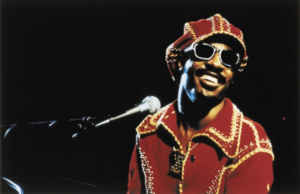
Stevie Wonder, 1970s, Concert Photograph. Photo: Fair Use.
Stevie Wonder is the world-renowned musical artist responsible for hits like “Signed, Sealed, Delivered”, “Superstition”, “Sir Duke”, “Sunshine of My Life”, and many more. Wonder was also blind since birth. He learned how to play the harmonica, piano, and drums by the age of 9. He got his first record contract at just 12 years old. He had plenty of creativity and intelligence internally; he didn’t need anything artificial to share his art.
Henri Matisse
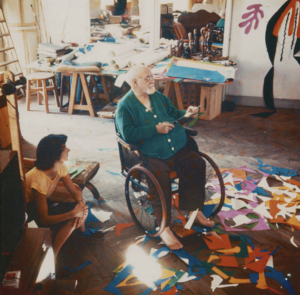
Matisse at the Hôtel Régina, Nice, c. 1952. Photo: Lydia Delectorskaya. © 2014 Succession H. Matisse
In 1941, following a surgery to treat his intestinal cancer, Henri Matisse became a wheelchair user. This did not stop Matisse from creating art. Instead, he adapted his technique to use scissors. To make his process accessible to him from his bed or chair, Matisse cut large pieces from colorful paper. In reference to his new style, he wrote to his son, “I have been given a second life”. Commenting on a piece that Matisse said was one of his most joyful works, The Parakeet and the Mermaid, he said, “As I am obliged to remain in bed because of my health, I made a little garden around me where I can walk. There are leaves, fruit, a bird. I am the parakeet. And I have found myself in the work.”
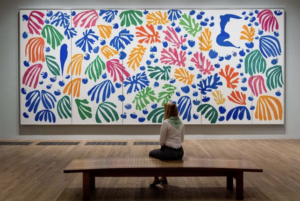
“The Parakeet and the Mermaid” by Henri Matisse at the “Henri Matisse: The Cut-Outs” exhibition at the Tate Modern gallery in central London on April 14, 2014. AFP via Getty Images
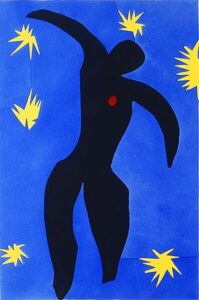
Henri Matisse, “Icarus” created in 1943-44. Currently in the Scottish National Gallery of Modern Art, Edinburgh, UK. Photo: Fair Use.
These are but a few of the many well-documented influential disabled artists through history. In the present day, there are countless successful artists with disabilities across mediums. There are well-known traditional artists, singers, comedians, authors, musicians, and more. They have all adapted their craft well before the presence of Artificial Intelligence, and our community will continue to do so.
I only just started working on my stand-up and have been able to travel across the country to perform. I write many of my sets from bed and often perform sitting down, contrary to the name. I have had my traditional artwork shown at art shows and sold to hundreds of customers. I love making people smile with my art. I executive-produced, co-wrote, and starred in a short film, Do No Harm, for the Easterseals Disability Film Challenge, which was seen by thousands and earned me a nomination for best actor. I made it with a crew of other people with disabilities and allies. I had never made a film before.
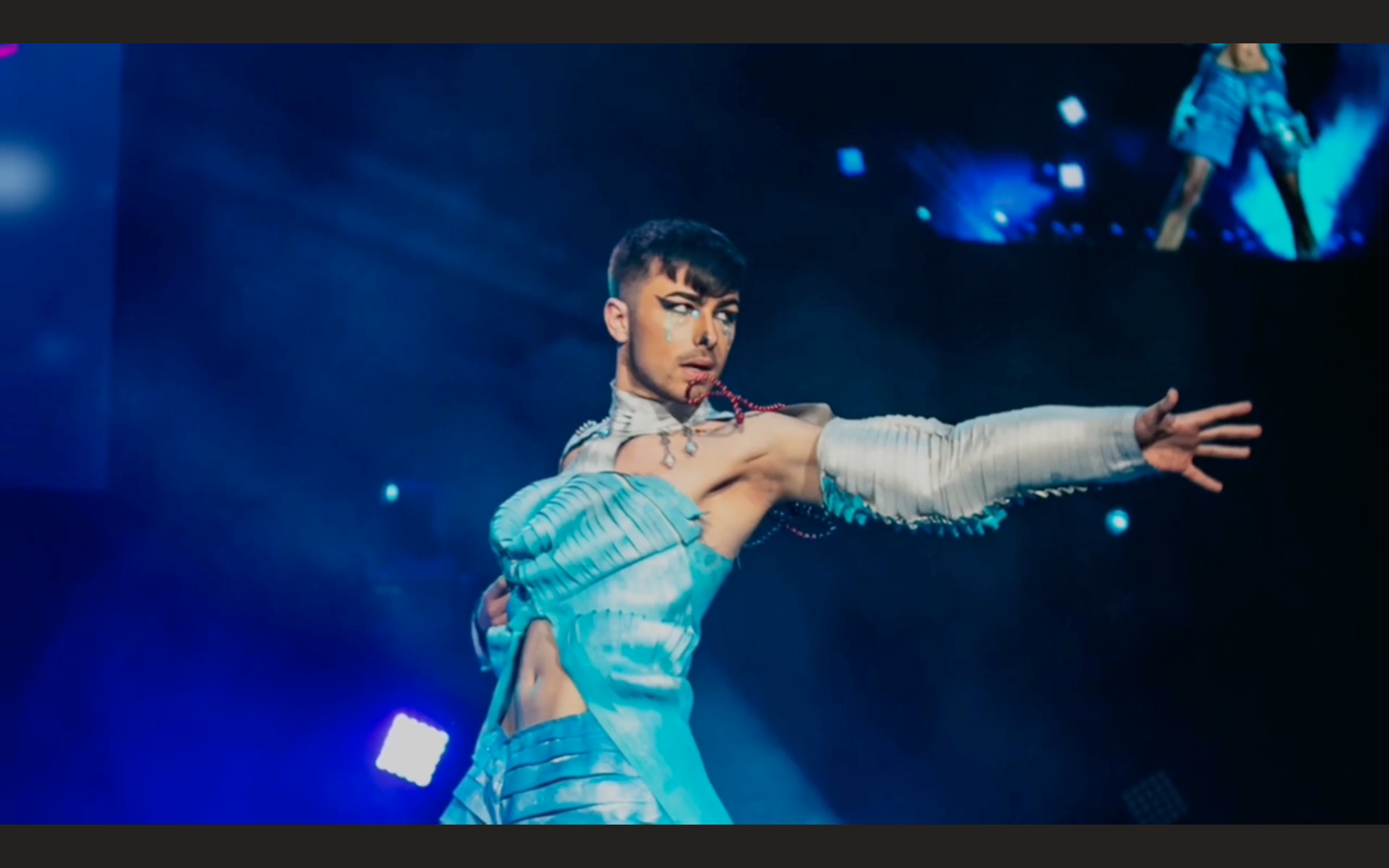
I’ve found ways to make art accessible to me. I’m a multimedia artist, and I need art to survive. Art is how I and so many other disabled creatives express ourselves. I do drag, comedy, act on screen, make my own films, do physical art like painting, jewelry making, and crochet. I use all of it to share who I am and connect to others. I genuinely believe everyone has creativity and art inside of them; they just need to find their outlet for self-expression. I especially believe disabled people are creative because of the constant social, medical, and societal barriers they must work around and endure. We are put in a world not built with us in mind. Despite the fact that everyone will join our community one day.
AI is not and will never be “the only way to make art accessible.” Art has no one definition and is for absolutely everyone. Let me know if you enjoyed this article and would enjoy a second part with more artists you didn’t know were disabled! Or one sharing modern disabled artists and their work! Make sure to share this if you agree or learned something new. Nobody needs generative AI to make art. You have the creativity inside you;, you just need to find the medium that works for you and get inspired.
We don’t need AI to succeed; we need accessibility, education, awareness, and acceptance.