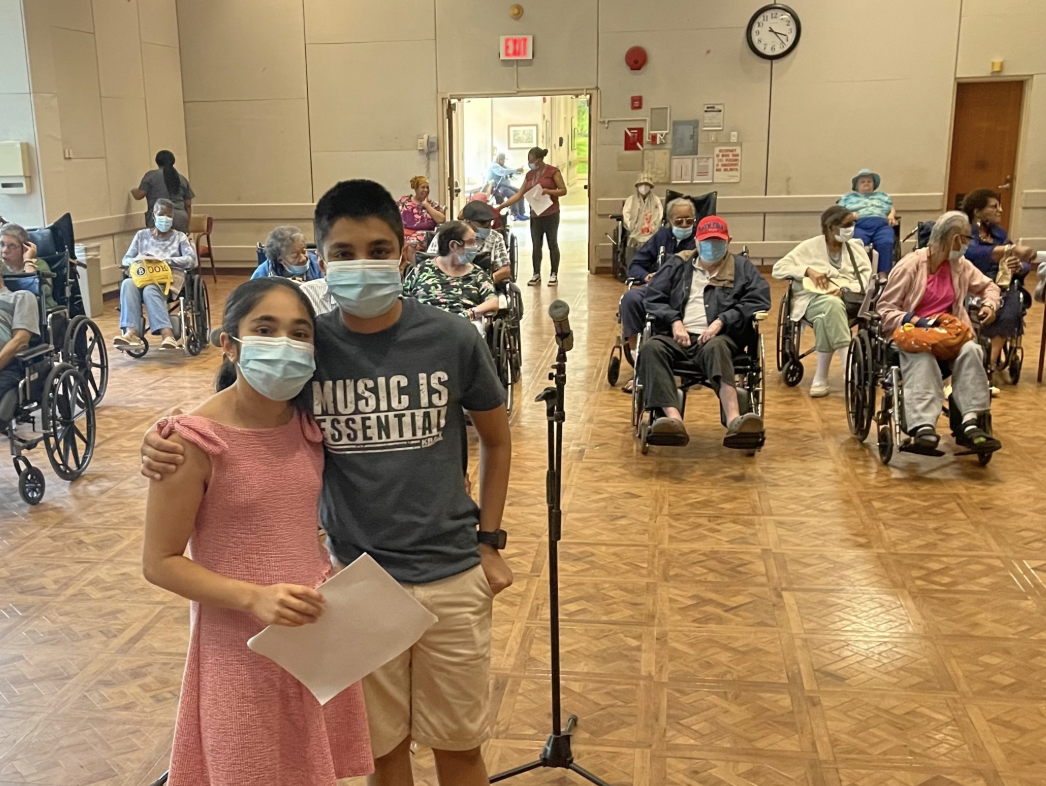


My love of debate was largely by happenstance. It started with a five-day summer camp at the New York City Urban Debate League. There, I discovered the excitement of researching issues, forming arguments, and engaging in spirited discussions with peers equally curious and determined as I was. In middle school, I joined weekly debate classes at the Bergen Debate Club, and, throughout the pandemic, spent hours debating virtually from my bedroom.
As I became more involved in the community, I saw the often insurmountable barriers that exclude a vast majority of students. Residential summer training camps cost upwards of $5,000 for just two weeks. Tournament entry fees have risen by 63% over the past decade, and the costs of flights and hotels have also increased. “Insider” knowledge circulates among the top-ranked debaters: unspoken rules about which tournaments to attend and how to access the strongest evidence. I know I am not alone in my frustrations. My peers in Generation Z have grown restless over government inaction on gun control, reproductive rights, and climate change, yet the National Speech & Debate Association reports that a whopping 73% of teenagers are anxious about public speaking, hindering their advocacy. No matter how many budget shifts are made, too many families will never be able to access public speaking training.
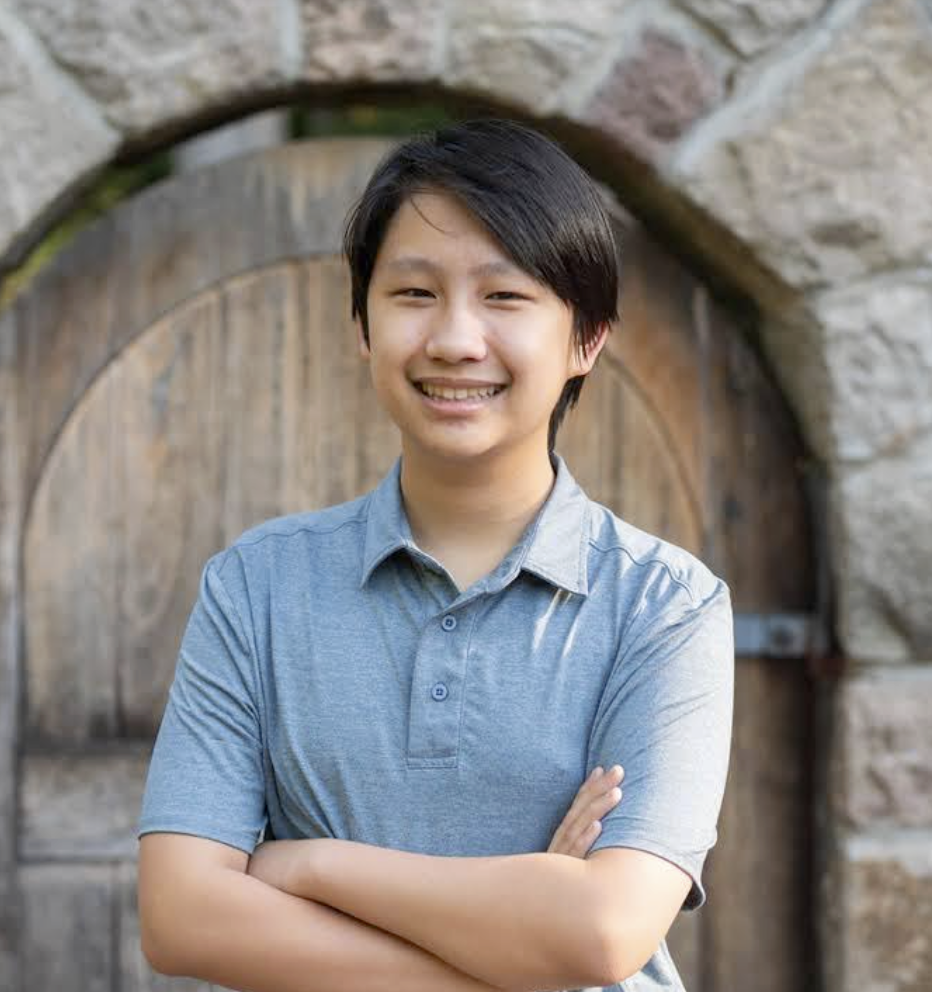
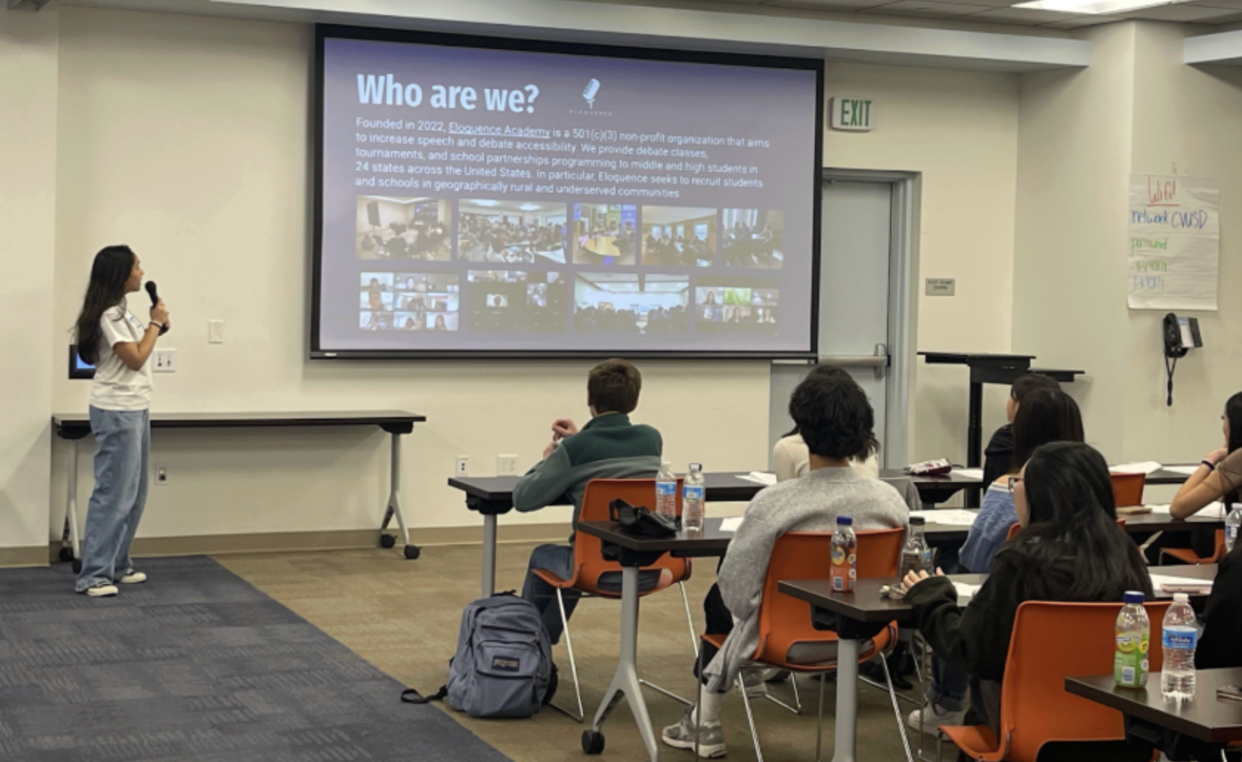
In 2022, I founded Eloquence Academy, now the world’s largest youth-led 501(c)(3) nonprofit organization dedicated to increasing equitable academic debate opportunities for geographically rural and historically underserved students. I have mobilized 300 volunteers and institutional partners to offer low-cost debate classes, tournaments, workshops, and in-school programs for 3,000 students across 40 states and 20 countries. With a creative approach to outreach, we recently partnered with the Jay Pritzker Academy and Kaabe Schools and launched the first-ever coaching programs in rural regions of Angola, Cambodia, and Somaliland. Previously, working with the Latino Education Advancement Fund, we pioneered a year-round, bilingual debate program for elementary students who are native Spanish speakers.
My work ranges from preparing grant applications and overseeing programming to writing curriculum and meeting with the Board. Every week, I commit to leading one live program, whether teaching a class or judging at a tournament. I believe that debate can be for everyone, and I always share my personal story. For teachers unsure about integrating debate into the classroom, I emphasize how the activity sharpens critical and analytical thinking, as well as skills in English, reading, writing, and research. For students, it offers a community of like-minded peers from across the globe.
And, indeed, the most meaningful part of my work is seeing debate flourish in unexpected places. When a small rural middle school in California lacked enough students for a debate team, I collaborated with a volunteer to design an engaging, SpongeBob-themed lesson on logical fallacies. Later, I invited guest speakers from nearby recycling and water conservation centers to help students research the merits of a single-use plastic ban and understand the local, community-specific consequences. Looking ahead, I hope to expand these initiatives even further—to reach students across Africa, South America, and Asia, including those with limited English fluency. I dream of building a global virtual debate ecosystem where students can learn and compete with one another from anywhere in the world.
One of our greatest milestones came in 2024, when I applied for and won $150,000 of in-kind and monetary grant support from Google, Microsoft, and the Hershey Company. Their funding enabled me to expand our curriculum across borders. We digitally published nearly 100 resources pulled from our classes and in-school programs. Complete with video modules, quizzes, and interactive worksheets, that webpage has received 39,036 visits and attracted 15,579 unique student users across all 50 states and 102 countries.
In part because of Eloquence Academy’s successes, I have received dozens of messages from young leaders seeking to build their own nonprofits and community-betterment initiatives. At first, I used my social media platform to broadcast my best tips, amassing 840,856 impressions. While I continue to run a weekly nonprofit advice series to this day, I have always been eager to work more directly with young people. Last year, I began serving as an independent nonprofit consultant, providing customizable, strategic advice on grant writing, volunteer management, and program development. So far, I have worked with 60 chapters, organizations, and young leaders, collaborating to raise $20,000, donate 30,000 items (primarily menstrual health products, hot meals, and winter coats), and impact 15,000 individuals in need.
Whether laughing on a late-night Zoom call or seeing students’ pride after a first successful debate round, I am constantly reminded why this work matters. My great satisfaction is helping more students find their voice. Young people can—and should—use their voices, creativity, and fresh ideas to change the world.