


I joined my first coding class when I was fourteen. I hadn’t really planned to, computer science never felt like it was “for someone like me.” When I walked into that classroom, sat down, and looked around, I quickly realized I was the only girl.
Usually, I’m comfortable being different—as a Muslim, dyslexic, autistic woman from a low-income background, I’m used to standing out. But this time, it felt heavier. By my second lesson, the gap felt too large to bridge. I didn’t quit because others were unkind, in fact, my classmates and teacher were encouraging. But sometimes, encouragement alone isn’t enough. We don’t just need kind words; we need representation and action. So I switched subjects, to something more familiar and full of other women—art.
Two years later, I tried my hand at computer science again. Older, more self-assured, and ready to face what had once scared me. I signed up for A-level Computer Science at 16—and this time, there were two women in the class, including me. It was a small difference, but it mattered. I stayed.
I went on to study a bachelors in Computer Systems Engineering at university, where there were more women (though still not enough.) I graduated with first-class honours (4.0 GPA) and became a full-time software engineer. But along the way, I found something even more meaningful: a passion for helping other women in STEM feel seen and supported.
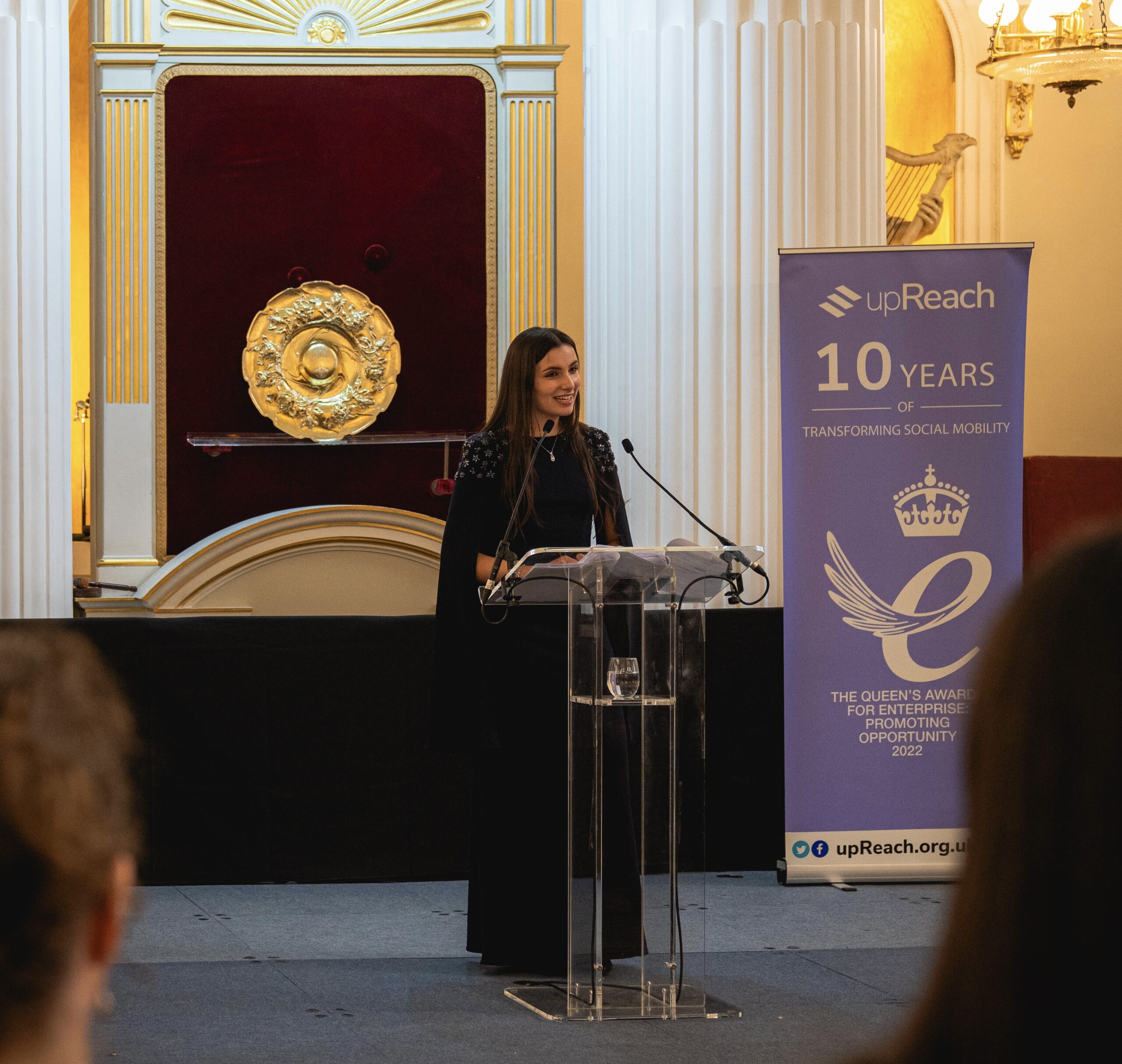
During university, I became a Rewriting the Code ambassador, leading a CV review program that helped over 300 women in the UK break into STEM jobs, built a community of 20,000+ collective followers online sharing my experiences as a woman in engineering, and received the Google Europe Scholarship for Computer Science. I was honoured with the upReach SSMA (student social mobility) award in Tech (2023) and later returned to host the upReach SSMA Awards (2024).
Soon, I’ll be returning to my old secondary school – the same place I once quit coding—to speak to the next generation of girls. Representation isn’t just about who’s in the room. It’s about who believes they belong there.
If you want to make a difference, start where you are. Encourage the girl who doubts herself. Celebrate the woman who speaks up. Challenge stereotypes when you see them. Mentor, include, and uplift—because every act of kindness and representation, no matter how small, helps build a future where no one feels out of place in STEM.