



Mental health matters every month, but May is specifically recognized as being Mental Health Awareness Month. This month is a great time to spread awareness, education, and resources surrounding mental illness in all its forms. Of course, there are many ways to do this. You can share your story or listen to a podcast or even share resources with friends and family.
However, I feel as though people underestimate the value of sharing information through the written word. There are many books (both fiction and non-fiction) that touch upon mental health awareness in varying ways. Here are six of my favorite mental-health related books. I hope that you get something out of looking at even one of these:
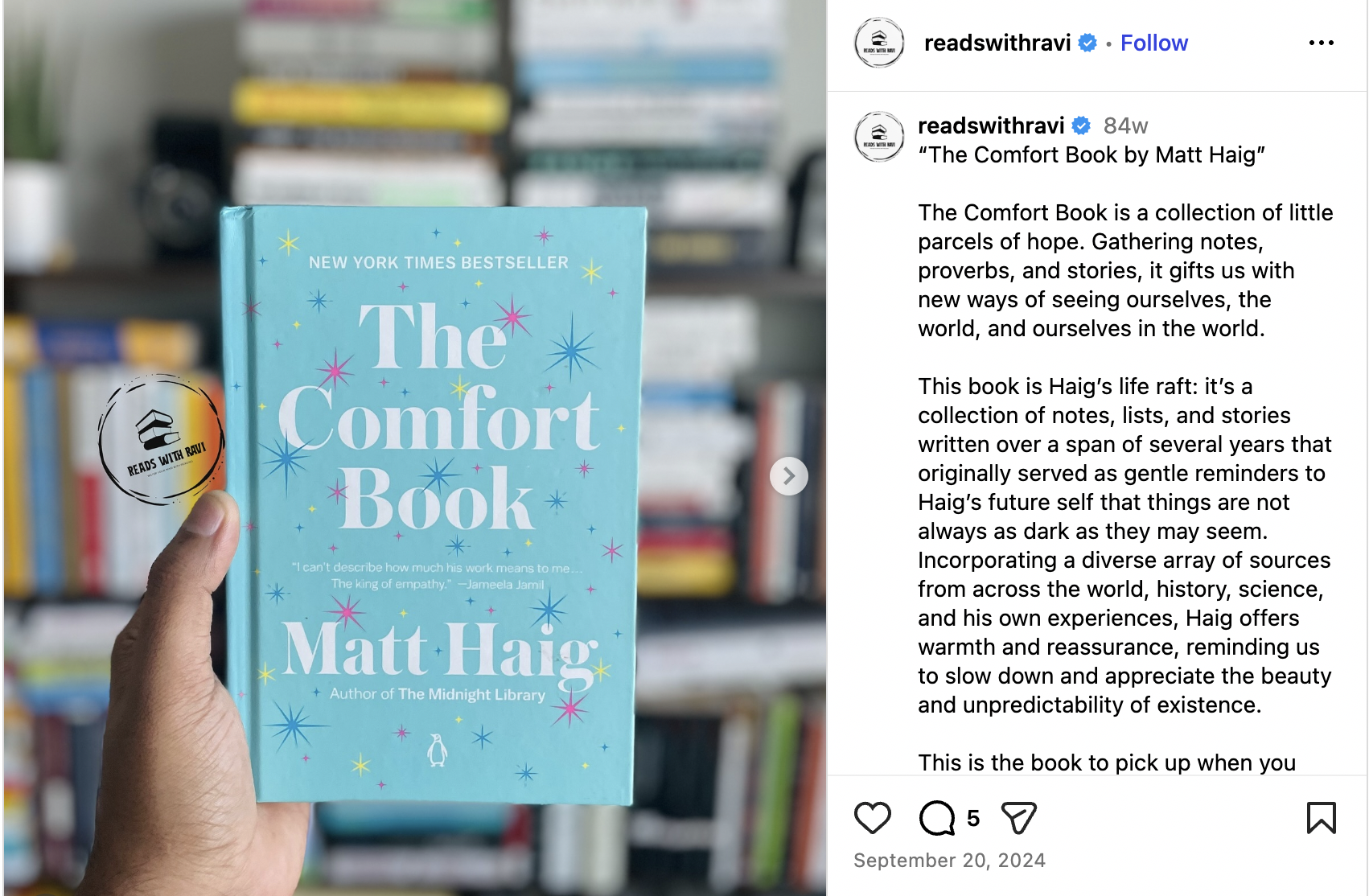
1) Adult nonfiction: “The Comfort Book” By Matt Haig
Haig is one of my favorite authors, and I discovered him when I stumbled upon a copy of The Midnight Library. He has three mental-health related books: Reasons to Stay Alive, Notes on a Nervous Planet, and the Comfort Book.
I’ve read them all, but the Comfort Book was my favorite because it read like it was trying the least to be impressive but, in my eyes, it was the strongest from a literary perspective. It’s filled with a unique collection of notes, lists, and stories that resonate. In his work, Haig in my mind is known to say the true thing concisely, and that, to me, is comforting.
My favorite quote from this one is about perspective: “The best thing about rock bottom is the rock part. You discover the solid bit of you.”
2) Adult fiction: The Yellow Wallpaper by Charlotte Perkins Gilman
TW: Depression, confinement
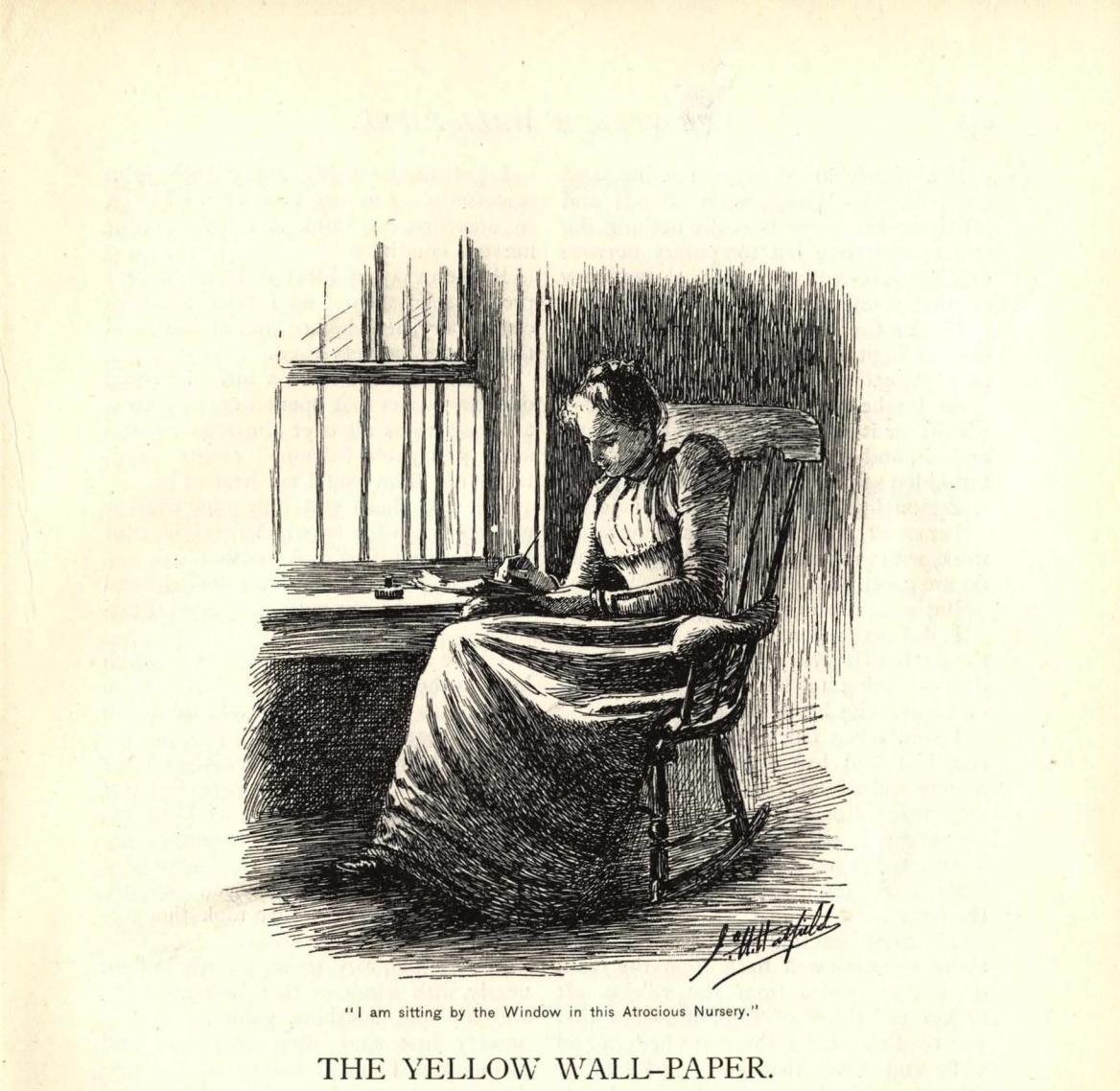
It saddens me to remember that they don’t teach the classics in school anymore because this of all books deserves to be a classic and deserves to be read. A heart -wrenching read, this book follows an unnamed narrator who is confined by her physician husband as a cure for her “temporary nervous depression.” I think that the writing from a purely syntactic lens is incredibly strong in this one.
This book is an example of feminist literature, and some literary critics view it as an account regarding the stifling societal constraints placed on women during the late 1800s when this book was written. This is one of my all-time favorites and I am excited to feature it here.
My favorite quote: “John says the very worst thing I can do is think about my condition, and I confess it always makes me feel bad. So, I will let it alone and talk about the house.”
3) Adult Nonfiction: I’m Telling the Truth, But I’m Lying by Bassey Ikpi
As someone living with Bipolar II, there could be more representation about what it is like to live with Bipolar II versus Bipolar I or major depressive disorder. Because the hypomania periods in bipolar II are not as intense as bipolar I, people oftentimes think of Bipolar II as being “bipolar lite” but in my experience there is no “lite” in Bipolar II. The hypomania may not be as severe as Bipolar I but the depression can be disabling.
View this post on Instagram
In this memoir, author Bassey Ikpi openly discusses their lived experiences with Bipolar II disorder. While all of their experiences may not apply to you, this book provides a much-needed glimpse into the diagnosis of Bipolar II specifically, as Bipolar II is often forgotten about in the mood disorders conversation.
4) Young Adult Fiction: Turtles all the Way Down by John Green
This is probably the most well-known book in this list, and for good reason. Author John Green, who arguably earned his fame through writing The Fault in Our Stars, reportedly deals with mental health concerns himself. This book’s main protagonist lives with both obsessive-compulsive disorder and anxiety, and that is not a brief sidenote, but a core part of this work.
Like Bipolar II disorder, Obsessive-Compulsive Disorder (OCD) is oftentimes overshadowed by other anxiety diagnoses, and when it is in mainstream media, it is sometimes portrayed stereotypically. While the protagonist’s experiences with OCD may not be relatable to everyone, Green does go outside of the stereotype box and portrays a realistic picture of someone living with this mental health condition.
5) Young Adult Fiction: Mosquitoland by David Anold
This is one of my all-time favorite young adult novels. I’m not a huge fan of the young adult literature genre in general, but this one was worth a read and then some. I think that you have to be okay with ambiguity in order to really appreciate this one, and I’ve known some people to think that the main character’s voice is uniquely quirky, but I think that if that’s the worst thing one has to say about a book then it must be a pretty good read.
This one is so unique that I don’t want to give too much away, but I will say that it touches upon themes of physical disability (the main character is half-blind), parental divorce, moving, and parental illness.
My favorite quote from this one is: “Sometimes a thing doesn’t seem real until we say it out loud.”
6) Children’s Literature: “The Worry Balloon” by Monica Manilla
I am not ashamed to say that I sometimes browse the children’s section for comfort; and although children’s books are not my go-to books, I appreciate the entire genre of children’s literature. One book that really stood out to me was “The Worry Balloon” because it did not just talk about anxiety, but anxiety was the central theme of the story.
In “The Worry Balloon,” a girl named Isla is taught to manage her anxiety about her first day of school by imagining her feelings as a ballon that she can blow away. That seems like a simple presence but my mom read to me nightly as a kid (I was born in 2001), and I do not remember a single book where anxiety was featured front and center like that.
I could keep going on for a very long time about books and mental health awareness. I think that books reach more people than most of us realize. Having access to diverse books is so important. It is gratifying to see how every genre is becoming more diverse in terms of not only main but supporting characters. When the state of the world is distressing, browsing the children’s literature section is a valid coping strategy. More seriously, though, I hope this gives you a few ideas of what to read for mental health awareness month.