


In an era where concerns about youth mental health continues to grow, organizations around the world are investing in programs to support young people’s wellbeing. Yet too often, the lived experiences and insights of the very communities these initiatives aim to serve are missing from the conversation. The Kindness in Community Fund’s Authentic Youth Engagement event explored what it truly means to give young people a seat at the changemaking table.
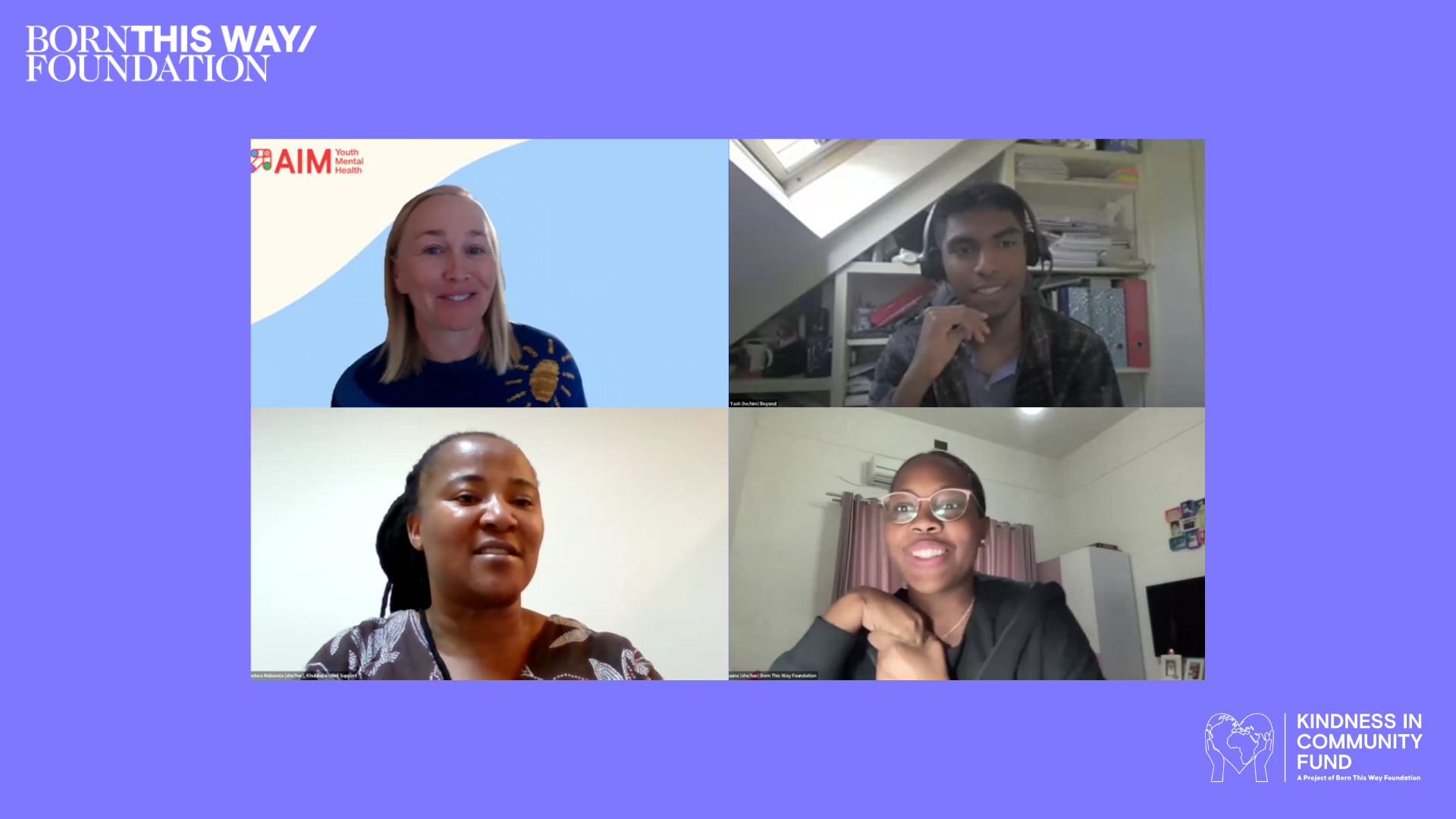
In a discussion led by Born This Way Foundation Youth Advisory Board Member Luana M., panelists shared their experiences and advice on how to make room at the table for young leaders, innovators, and advocates. Their insights offer three key takeaways that can help organizations effectively engage with the young people they hope to serve.
1) Prioritize Young People’s Insight at Every Step
When building programs that are meant to support the young people, organizations should engage directly with the people those programs are designed to serve. Zodwa Portia Mabusela, the Khu Kids Coordinator at Khuleka Grief Support in Cape Town, South Africa, emphasizes how critical it is to work with and learn directly from the experiences of the program participants. The Khuleka Grief Support team incorporates feedback from their participants into a key part of their program design.
“We take those inputs, and we sit down and look at how we can add them to our program,” Zodwa said.
Jolie Delja, Executive Director of the U.S.-based organization AIM Youth Mental Health, echoed this sentiment. Describing the Youth Advisory Board at AIM, she emphasized that involving young people in program design must be “really intentional and real” to make a tangible impact. When approaching projects with her Youth Advisory Board, Jolie describes her role as providing the resources and support needed to bring the Youth Advisory Board’s vision and ideas to life, allowing them to “fully engage” in the decision-making process.
2) Ensure Young People Shape Decisions
Yash, a Youth Advisory Board Member at Beyond, highlighted how his work with Now & Beyond in the U.K. creates opportunities for young people to share their experiences and participate in broader conversations about mental health. Discussing his South Asian heritage in the context of his mental health advocacy, he says that “actually being someone who speaks up, even just being on camera [as a South Asian individual] makes a huge difference.”
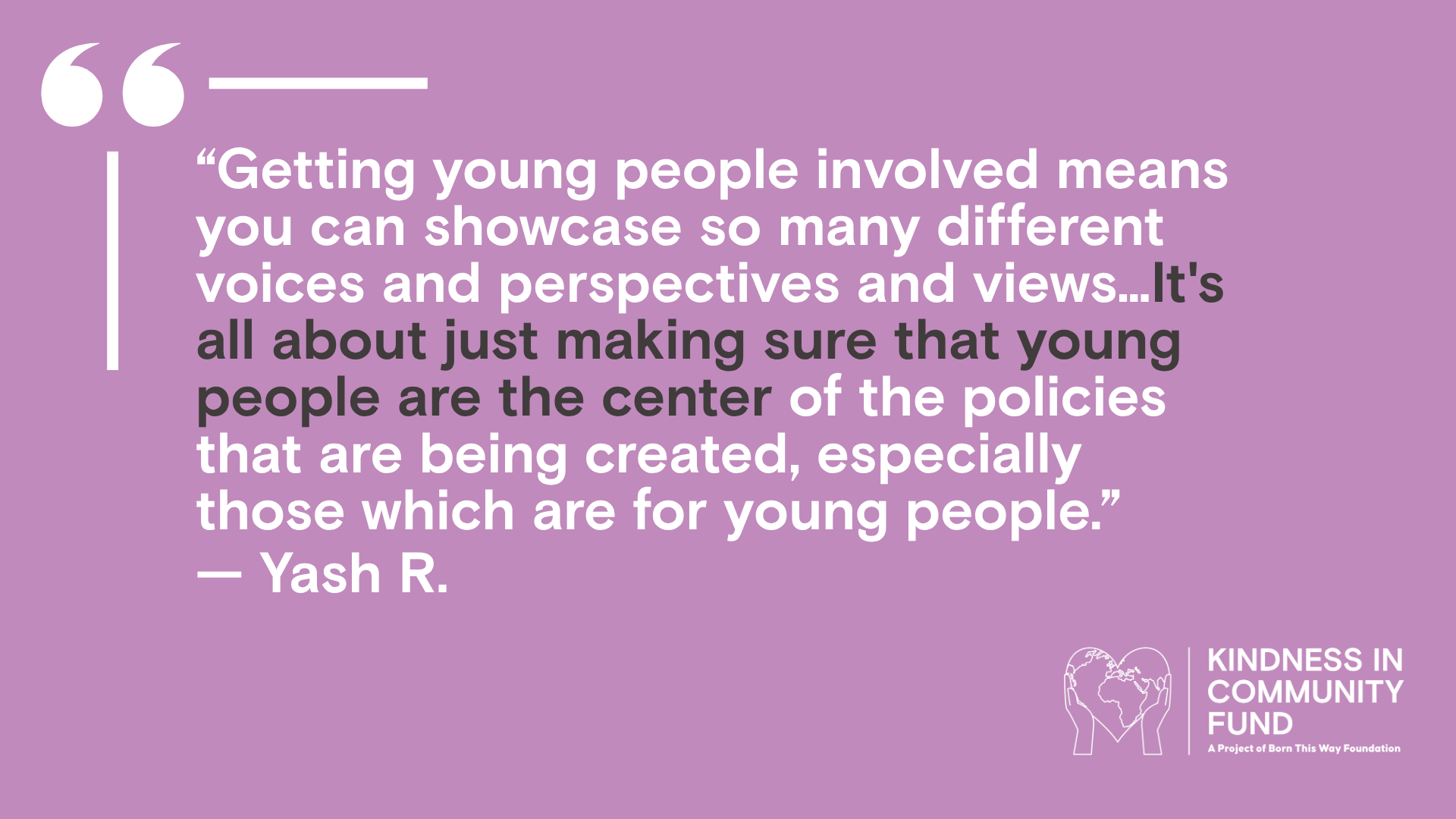
Yash also emphasizes the importance of involving young people in policy decisions that directly affect their lives. Rather than treating young people as an audience for policies created on their behalf, organizations and decision-makers should include them as active contributors throughout the process.
“The way I see it is [that] listening to young people is making sure that they’re in the conversation, and they’re actually creating something, and they’re getting involved,” he said.
While organizations play a critical role in creating opportunities for participation, meaningful youth engagement often begins with individuals who choose to listen, advocate, and make space for younger generations.
3) Remember That Small Actions Create Change
To amplify the work of the young people, it truly only takes one person to make a difference. Whether it is a young individual speaking up for what they believe in or a caring adult developing resources for active youth participation, it all makes a difference.
“There’s always one person who wants to listen to you,” Yash said. “I feel hopeful about the future of youth engagement, because for every one person out there that doesn’t want to listen and doesn’t take into account the voices of young people, there’s a hundred others who will.”
While immediate, large-scale results are often looked to as signs of impact, meaningful change is created from the sum of many smaller actions. Zodwa, describing her work providing grief support to bereaved young people, emphasizes this point. “What I enjoy the most about my work is to see at the end of the day that I have helped a child…even if it’s just one child for a day, or for a week.” In remembering that every impact and positive action, no matter how small, can make a difference, we can empower ourselves to generate incremental, consistent change.
The event closed with taking in the input of various Kindness in Community Fund participants, bringing the conversation full-circle back to the voices of young changemakers. These groups, based in various countries—from Brazil to Poland—and united by their focus on youth wellbeing, encouraged a shift away from viewing young people only as “recipients” of programs but as “participants” in the process of creating and implementing ideas.
By collaborating with young people as partners rather than solely beneficiaries, we can create more effective, empathetic programming for all.