Kindness is often described as an interpersonal trait. We imagine it in moments on a micro level, holding the door open, checking in on a friend, softening our tone in a hard conversation. However, there’s a broader, far-reaching version of kindness that operates well beyond individual interactions. It’s called universal design, where our systems, institutions, and communities are designed to be accessible for the widest range of people possible, instead of just the average person.
Why Accommodations Shouldn’t Be Exceptions
Historically, accommodations have been treated as deviations from the norm. A system is built for the average person, and then adjustments are made when someone does not fit that mould. The process is often reactive and individualised. A person must disclose, explain, justify, and sometimes prove their need before receiving “special” or “additional” support.
Even when the language tries to be positive, stigma can still creep in. Terms like “special needs” were initially created to soften how we talk about disability and support. Yet over time, those same words have been weaponised or used dismissively. For us neurodivergent folk, accommodations are not “special.” They’re just how we reduce unnecessary friction with a world that wasn’t built with us in mind.
Designing systems for the average person means that when we need accommodations, we get othered, so whatever language gets used to describe our needs will take on that stigma. When needs are no longer deviations from the norm, they stop being othered, and stigma starts to break down. Universal design allows our differences to stop being considered “special”. The accommodation of our needs stop needing many individual acts of kindness, because that kindness becomes embedded into systemic structures.
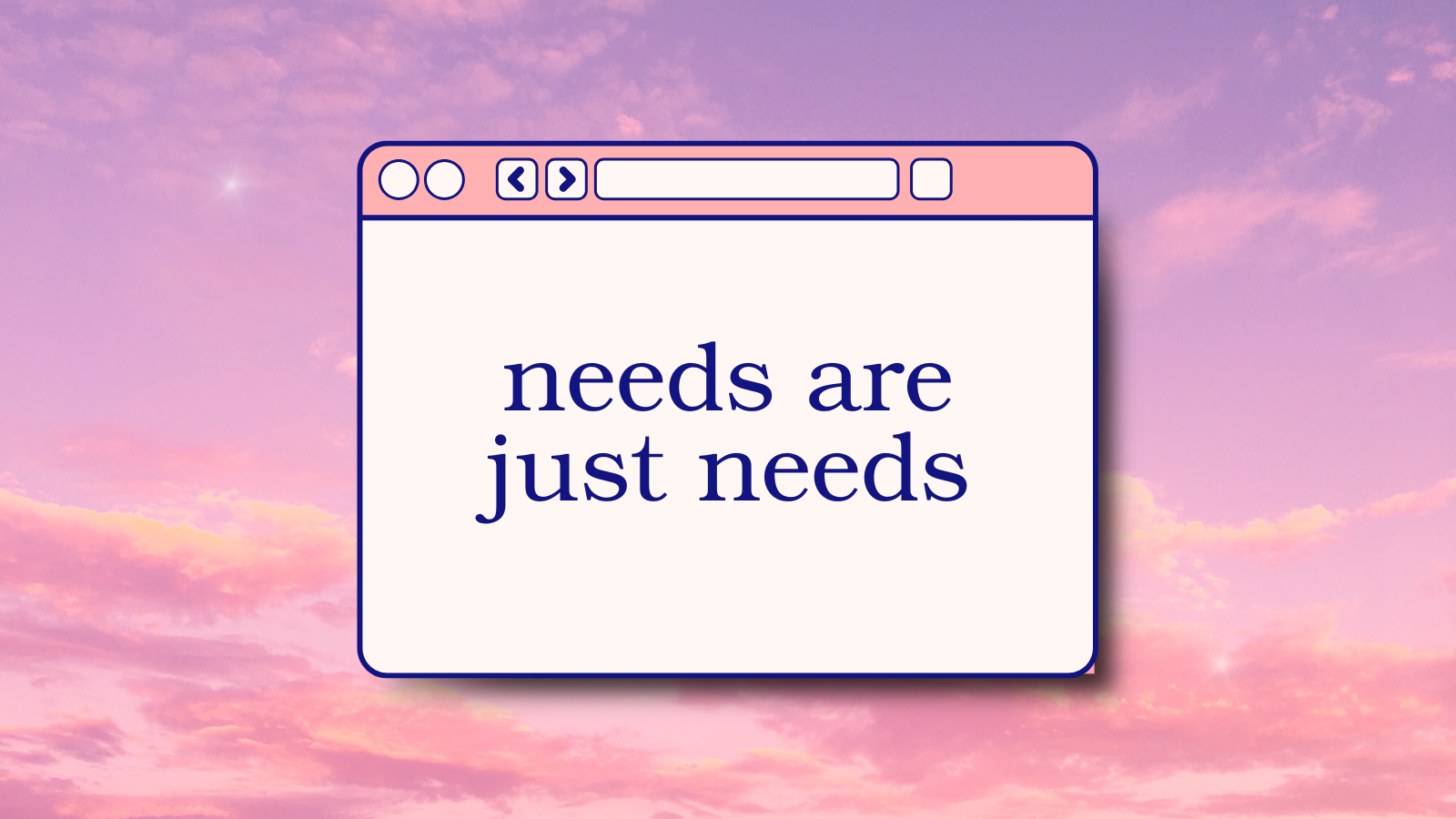
Universal design challenges the idea that there is a single “normal” user. It moves the goal from designing to accommodate the most common person to recognising that diversity is not an outlier to ignore. When systems, environments, and services are intentionally created to be usable by as many people as possible, the baseline of accessibility rises. And when that baseline rises high enough, the idea of “special needs” begins to dissolve. Needs are just needs.
What if instead of viewing accommodations as “special” needs, we redesigned our systems so that they were hardly necessary? With universal design, we can do this and begin to break down barriers that never needed to exist in the first place.
The Ripple Effect of Accessibility
There’s a common misconception that the changes brought by universal design only benefit a minority of people, but in reality, they’re useful for many of us. Accommodations for neurodivergent folk generally aim to reduce cognitive load, clarify expectations, and create psychological safety. These aren’t niche preferences; they’re often better for everyone, and they’re rarely worse for anyone. Some examples of this are…
1. Clear signage and predictable navigation reduce confusion and stress. They are essential for newcomers, travellers, and linguistically diverse communities. They are helpful for people with anxiety. They are useful for everyone when they are tired or overwhelmed.
2. Adjustable lighting, reduced noise, and access to quiet spaces help autistic people regulate sensory input. They also make spaces safer for people with migraines, trauma histories, or sensory sensitivities of any kind, and sometimes even the “average” person needs a moment to decompress in a calm place during moments of stress.
3. The flexibility to use text-based and asynchronous communication allows neurodivergent people to process information at their own pace and respond without the pressure of being put on the spot. It also supports introverts, busy parents, shift workers, and people collaborating across time zones.
4. Written task instructions and reduced ambiguity are common accommodations for autistic people. Yet ambiguity is cognitively demanding for everyone. Clear expectations save time, reduce misunderstandings, and lower stress across entire teams and classrooms.
These demonstrate how, when accessibility increases, collective functioning improves. The ripple effect extends far beyond an individual who would have requested these changes as “special” adjustments.
Accommodations Aren’t Burdens
Some may argue that universal design is too much work, that building accessibility into systems from the outside can be viewed as inefficient or excessive, when in reality, universal design can reduce workloads in the long run. Systems become clearer, smoother, and more efficient to navigate. Fewer individual exceptions need to be processed, fewer crises need to be managed, and fewer people need to spend all of their energy advocating for their needs.
The real burden has historically been on neurodivergent and disabled folk. We have been expected to navigate
systems and spaces that were not designed with us in mind, absorbing the cost of inaccessible systems through exhaustion, burnout, and exclusion. Universal design redistributes that burden by acknowledging that different ways of thinking, processing, and interacting are legitimate and need to be accommodated from the outset.
Expanding Kindness
Kindness is not measured solely by how gently we speak to each other. It is measured by the environments we create and the barriers we choose to dismantle.
If kindness remains only interpersonal, its reach is limited. It relies on individuals noticing, understanding, and responding in real time. That matters, but it isn’t enough; kindness should be systemic.
The kindest communities are those where people don’t need to repeatedly submit requests with supporting documentation to exist comfortably. When kindness is embedded in policies, processes, plans, and physical spaces, it becomes self-sustaining. It shapes culture, shifts expectations, and normalises difference rather than reacting to it.
Universal design is about asking, at the outset, who our design choices might exclude and how we can widen the circle, because accessibility should not be an afterthought. When we raise the baseline of accessibility, we build systems that recognise how none of our needs are “special.” They’re just needs.