

Why do we make art?
The act of creation has always been a way for me to find comfort in my surroundings. In some scenarios, it helps me to take my mind off of what’s going around me. In other situations, it helps me process these things.
I find it interesting that since the beginning of time, humans have found ways to make art. When early humans were fighting for survival, they still found the time and resources to make paintings on the inside of their homes – despite art not being “necessary” for survival.
Throughout history, art has served several purposes. It’s a source of comfort; a way to express feelings that can’t be communicated through words. It’s a means of documentation that persists through book burnings and collapse of civilizations around the world. Even in the midst of tragedy, humans continue to create.
Humanity is facing a unique set of challenges at this moment in time – climate change, human rights violations, extreme weather events, disease, etc. So what is the role of art in this current era?
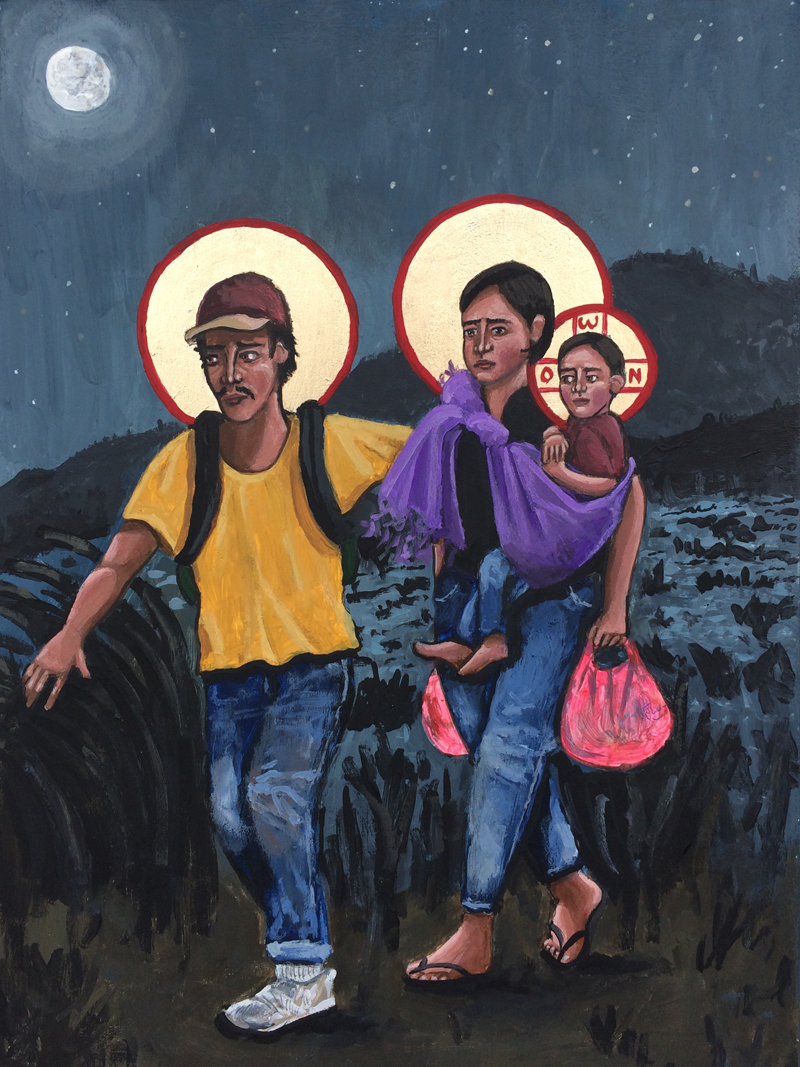
According to the National Endowment for the Arts, “arts education can help students better cope with their feelings, bounce back from adversity, and show tolerance and compassion for others.” It helps us understand – other people, other places, other perspectives, the world around us. It helps us see things we would normally overlook by highlighting the most interesting and subtle parts of the world around us.
In other ways, individual meditative, mundane acts such as knitting or cross-stitching can also provide relief and comfort. Dr. Paula Redmond, a clinical psychologist, writes that in her own experience, the rhythmic, soothing, repetitive action of knitting allowed her brain to rest.
There’s a current trend in music where people are turning to “recession pop” as an escape. Loosely defined as high-energy danceable music, recession pop provides a feeling of connection amidst increasing division. People turn to the dance floor as a way to distract from the challenges of the outside world. Art is a means of unification – people can dance to the same beat in the same room or listen to the same song on headphones miles apart and know that they’re not alone.
Lastly, art makes the world a better and braver place. What would the world look like if Aretha Franklin didn’t go onstage and demand respect? If Keith Haring didn’t make street art focusing on public health in New York City? If James Baldwin didn’t write novels and poetry about racial justice and equal rights?
When we see artists be their true selves, it helps us to be our true selves. Artists push society forward. They are role models; trailblazers. The National Endowment for the Arts staff collaborated in a 2015 article reflecting on the importance of art, which can be summarized in a single quote: “The arts matter because they help us understand how we matter.”
Humanity is born with an innate desire to create. Something in our brains compels us to make something out of nothing, even when we are fighting for our survival. Creation is essential to our being, and only the act of creation can bring us into a kinder and braver future.