14,343 actions.
2,483 stories.
76 countries.
That’s the impact one kind conversation or the decision to be vulnerable and open in sharing your story safely and honestly can have–not just on yourself or a friend, but the world.
And as I sit down at my kitchen table to reflect on what the story of our first ten years has looked like for this platform on a fall Minneapolis day in September, with Ego Death at a Bachelorette Party by Hayley Williams playing through my headphones and staring at the leaves and everything they represent as a symbol of rebirth–I can’t help but beam with pride knowing that it’s a perfect example that encapsulates everything that we mean when we say Born This Way Foundation is made by young people, for young people. A mix of emotions washes over me while I think about all that has happened in the lives of foundation reporters, staff, and even myself over the last decade.
A passionate writer who loves to not only express myself in writing as a form of catharsis due to significant life challenges as well as someone who loves reading, I’ve always loved using storytelling as a way to connect with others. Even as far back as middle and high school in the late 2000s and early 2010s, I would engross myself in books—personal favorites at that time included YA staples like The Hunger Games or The Fault in Our Stars. When I went through a rather difficult mental health crisis in my teen years due to extensive trauma, I would spend hours expressing myself through writing because, to be frank, though there were adults in my life who wanted to help, they didn’t know how and often felt helpless. Because of that, a small group of trusted friends, as well as books, my keyboard, and music were anchors that kept me afloat.
In trying to explore my life passions—in part because I was questioning the meaning of life and what paths my life could or would take, largely due to severe and ever growing disabilities and medical challenges—I discovered Born This Way Foundation. Founded by Lady Gaga and her mother Cynthia Germanotta, the goal of the organization was both simple and lofty in the three pillars that spearheaded its work: to create a kinder and braver world by making kindness cool, validating the emotions of young people, and eliminating the stigma surrounding mental health. I was inspired by their work, trying to imagine that someday I could help do something similar even if on a much smaller scale as a way to not only help others but hopefully, heal myself in the process. My hope was that I could find a way to find the most broken parts of me and help myself to see the beauty in that brokenness; the purpose for that pain.
What happened next is a bit like something out of a movie. One thing led to another and, in 2013, Lady Gaga and I met at a show. I was 19 at the time, taking a gap year after high school, and in the months prior to our meeting, I had been dealing with an increase in my chronic pain caused by what would eventually become a total dislocation of my hip—for the third time—and additionally, the ball of my hip socket had also completely worn away by osteoarthritis with the cause being a double-whammy of quadriplegic cerebral palsy and an additional genetic disorder that I was also born with, though the latter was unknown to my doctors at the time due to my cerebral palsy masking the symptoms. Upon meeting at the St. Paul Born This Way Ball, Lady Gaga confided in me her own chronic pain after I suggested that she too might have a hip issue. The next day, she went to the hospital and found a hip injury, somehow powering through the next few shows but eventually having to pull the plug on the remaining tour dates to have surgery a few days after.
A friendship formed organically shortly after. We connected over our similar experiences with chronic pain, gave each other tips on how to heal, and confided in one another. At some point around the beginning of my college years, I shared with her in a text conversation my love of writing as a form of processing my own unique life experiences as well as a few short things I had found in the deep pits and crevasses of the my Notes app on my phone. She said she loved it and honestly, I thought she was joking. Most of what I shared were incredibly unfinished drafts that were only sent to a few other close friends. I didn’t think much of it at the time, and not long after, I started classes at my local community college in a small Wisconsin town as an Associates of Human Services major, eventually transferring into a social work program a few hours north of me at a university. Like the rest of my classmates, I came into school with big dreams and an even bigger heart for others, though admittedly I was overwhelmed about potentially not being taken seriously as a student and my ability to physically complete the internship required for graduation.
Due to transportation difficulties, as well as significant pain and fatigue that would be more difficult to manage while doing in-person work, the wheels were turning in my head pretty early–as this was pre-COVID, remote work was thought of as untraditional, particularly in a program that emphasizes one’s ability to serve other humans dealing with things like mental health challenges and addiction.That said, fixing broken systems is a core part of human services and social work. I became entrenched in this area of the field, and large and broad systems-level change became a true passion of mine as far back as my first year of school. Call it boring and dry, sure, but the intellectual in me loved work focusing on things like the nonprofit sector, advocating for policy change, and reading and doing research to ask big questions about how we can create structural change in our social safety net rather than putting red tape on systems that have already been broken.
Eventually, in 2015 when myself and other classmates presented our internship ideas to my instructor after completing about half of our core classes, I took a bit of a shot in the dark and went to him about interning at Born This Way Foundation, given my relationships with staff, their community and nonprofit focus and the additional perk of it being entirely remote; something that would be super helpful in accommodating my conditions and helping me manage symptoms. To my surprise, he said yes and I started my placement at the foundation for what would be the final two semesters of my program. I had already met and known foundation president, Cynthia Germanotta, through my friendship with Gaga for some time in addition to the then executive director, Maya Enista Smith. From there, I met with the Programs team. My first semester was under the supervision of a former Program staff, Samantha Hanson, an incredibly bright and supportive individual with a Master’s in School Psychology who had just signed on as Program Associate after her own internship to help with both research-related projects and now, to help launch Channel Kindness itself, with the goal of the program being to give youth a voice in telling their stories, thereby flipping the script on youth narratives. Sam was incredible to work with and someone who taught me so much of what I now know about research, giving me a wonderful foundation for my later schooling and someone whom I will always be thankful for.
And as the program grew and changed, so did the staff members that eventually signed on to help run it. One of those individuals was Aysha Mahmood–a bright, happy and cheery person who had just signed on as the foundation’s newest Program Associate and who hailed from Connecticut with an impressive resume in journalism and political science. Aysha is, if I can be cheesy for one moment, pure sunshine in human form and quite honestly one of my favorite people. As Aysha’s intern in my second semester, I was focused on research and program development, ensuring day-to-day operations of all programming, but primarily Channel Kindness.
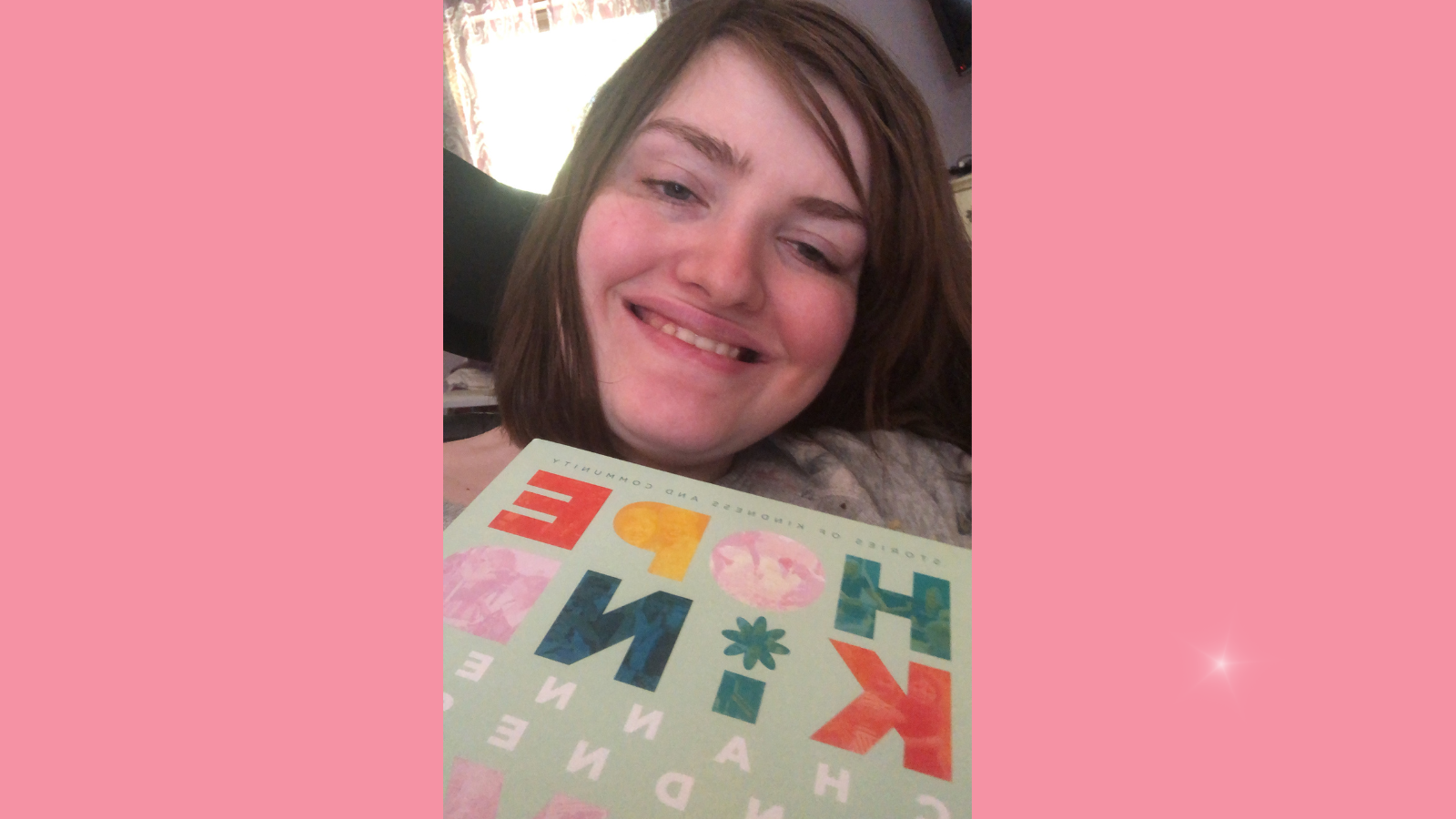
The program became a massive success under the foundation’s leadership, with the stories also finding their way into physical hands. The book, entitled CHANNEL KINDNESS: Stories of Kindness and Community, featuring the inspiring stories of 50 other incredible young people, showcases the stories of kindness, resilience, and community through things like youth-run community nonprofits, overcoming mental health challenges, and more. It went on to become a New York Times Bestseller, which felt absolutely amazing to have had even the smallest role in making that dream a reality for so many wonderful and talented individuals. Each author officially got to take the title of a New York Times bestselling author from that point forward—including myself, through a small portion of the book which I got to co-author as well.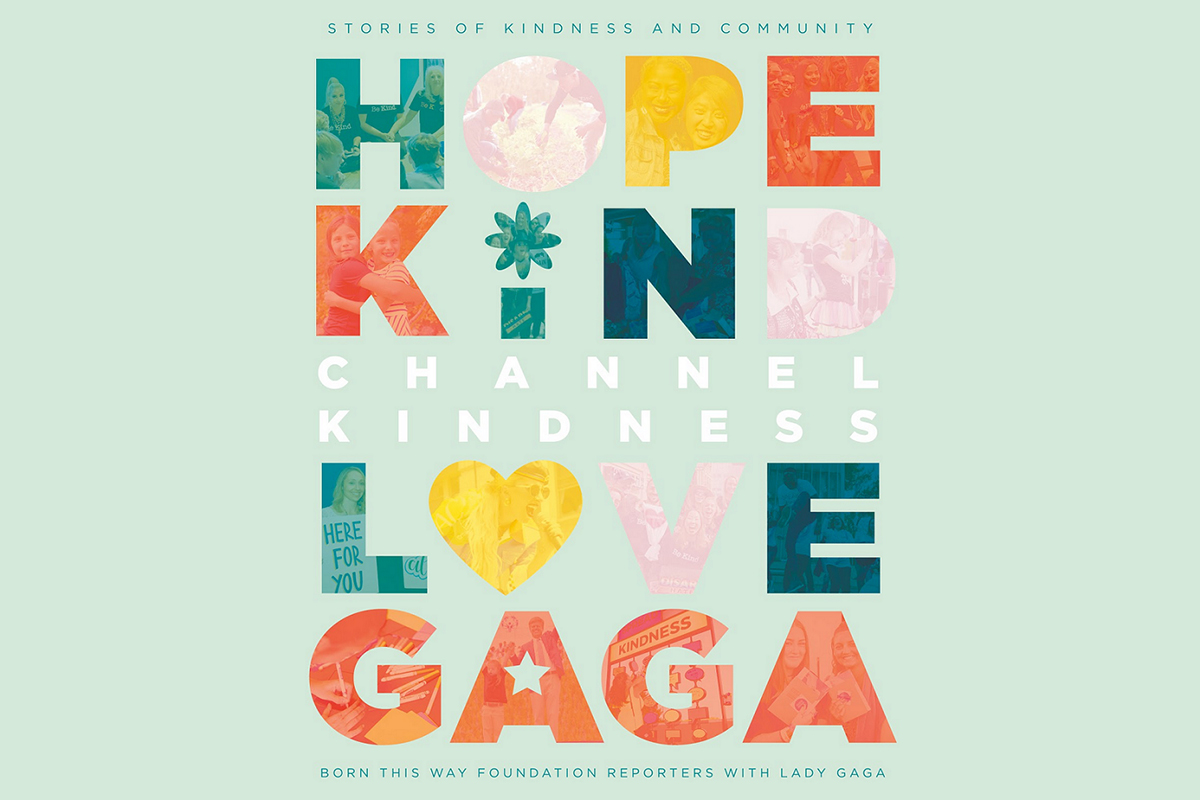
My chapter, titled “The Magic of Kindness,” is a personal narrative about how kindness from others, both in what I gave and received in my childhood years, is what got me through the most difficult times in my life and in turn was the thing that helped me to find healing in the most unexpected way. In the book, I write:
“Ultimately, I used my pain for someone else’s good, and at the end of the day, that’s all the girl that cried herself to sleep at night ever wanted. Do I have bad mental health days sometimes? Of course, but kindness–both in what has been given to me and what I’ve been able to give to others–has been the thing that saved me. ”
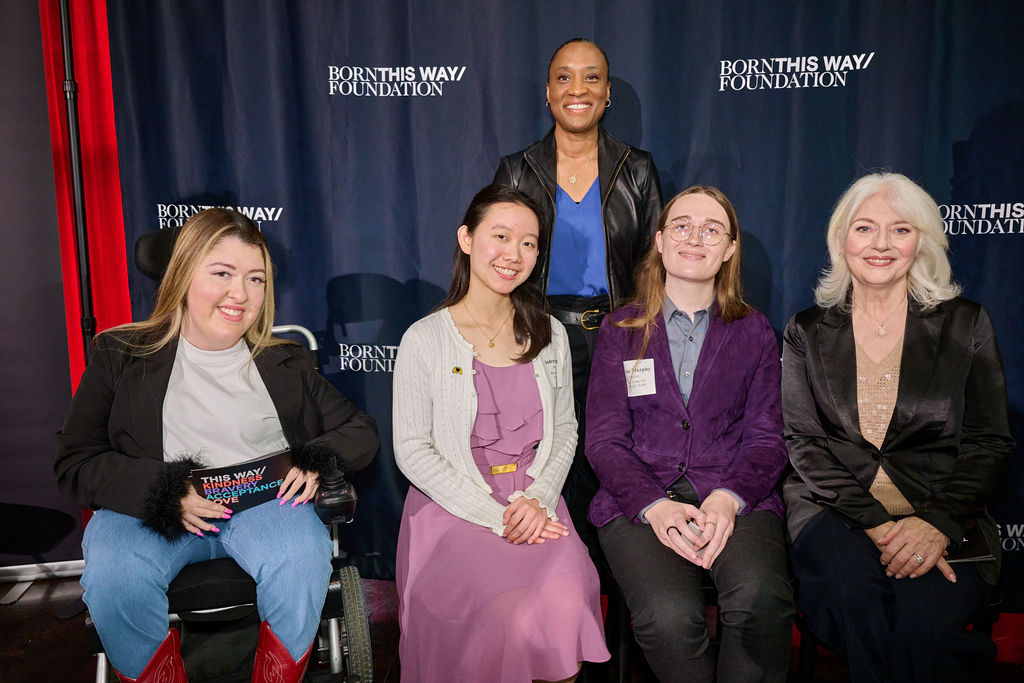
And after hard work, and, well—nerves, the book launch, or “pub day” as they call it in the publishing world, was upon us. CHANNEL KINDNESS: Stories of Kindness and Community launched in Fall of 2021, with a beautiful launch event hosted via Zoom featuring three of our talented New York Times Bestselling Authors. A team meeting was hosted after, and Lady Gaga congratulated the team for their incredibly hard work. After seeing I was on the line, she spoke up again, trying to get my attention.
“You heard what I said [during the launch], right?” she said, referring to a statement she had made during the event about me being much of the inspiration behind the program.
“I mean, yes, but…” I trailed off, trying again to let everyone else their much deserved moment.
“I meant what I said. You were the first person that inspired us to make this and it wouldn’t exist without you, so thank you,” she said, referring back to how I shared my story–both in-person and through the depths of my notes app–all those years ago.
In the ten years since Channel Kindness’ launch, thousands of kind actions have been taken and stories have been written from all corners of the world through this platform. I never could have dreamed that those kind conversations with Lady Gaga or those dusty iPhone notes would have led to any of this. Honestly, I truly believe Channel Kindness is about way more than just me; I wholly believe it to be about the collective good of each contributor that chooses to bravely tell their stories as well as the individuals that choose to read them— who were all responsible for bringing and sharing more than 2,000 kind stories into the world.
It’s still a bit hard to believe, honestly, in the best possible way, in the growth of this platform—even in continuously difficult health challenges and the state of the world at present. If this platform proves anything, it’s that these stories–and these young people–continue to give me hope that we can believe in a better future, one story at a time.
And that’s exactly how I found beauty in my brokenness.