


“Strengthen your personal relationships” was the advice I received upon starting my doctorate program in counseling psychology. I was talking to a professor who said the hardest part of the program for many students is how much grad school affects their personal relationships. At first, I found his advice intimidating. It even brought up some defensiveness, and made me question my readiness for the program.
The truth is many graduate students struggle with their mental health, and for good reason. Entering a graduate program is a huge commitment, and graduate students are at higher risk of burnout, exhaustion, and strain on personal relationships due to increased work load, financial strain, and work-life imbalance. Self-report rates of anxiety and depression are six times higher among graduate students compared to the general population. The pressure to succeed in graduate school can feel intense. This pressure can be self-inflicted– however, many graduate students report it is often felt on an institutional and department level. At a time when peers are reaching personal and professional milestones, graduate students often describe feelings of isolation, as they pursue a path marked by a sense of delayed gratification, and a long-term investment to an extended period of professional training.
When I entered my graduate program, I tried to maintain a strong sense of optimism. Looking back, I realize I had limited strategies for self-care. In my first year, I recognized my mental health was suffering when I began to develop a strong case of imposter syndrome, and my anxiety was at an all time high. I started experiencing unexpected bouts of panic, and found it difficult to “let go” of the stress of the school week when the weekend rolled around. There are a few things I wish could have told myself then:
- Prioritize friendship at school: Graduate school is a unique phase of your life, and it is normal to feel like peers outside of academia might not fully relate. The truth is– they probably do not, and that’s okay! My mental health improved drastically once I started to form relationships with classmates who acutely understood what I was going through. From the research, we know that competitive academic environments can take a toll on graduate students’ mental health. Friendship and support are excellent antidotes to competition.
- Boundary your time: Boundaries are one of the most powerful forms of self-care—for both ourselves and those around us. In my first year of the program, I felt like I needed to be accessible at all times. I’ve since learned that boundaries are good for all parties and allow for more consistent, sustainable progress toward my degree. Sometimes, it is okay to close your laptop knowing that work will be waiting for you the next morning. For me, setting time aside to do the things I love, such as cooking, spending time outside, and seeing my family are all powerful mood boosters. This benefit often carries into my work, a positive mood has been associated with creativity individually and in team settings.
- Reframe “balance”: The first few years of graduate school I struggled to balance my personal and professional life. Graduate school often works in a cyclical nature, and during busy seasons balance between work and life feels unachievable. Instead, I have found it more helpful to focus on improving how I transition between these domains. I love the way Clarke’s (2000) border theory describes each of us as “border crossers” that transition to and from work and life using physical (place, space), temporal (time), and psychological (emotional) borders as our barriers. We all have the ability to adjust the permeability and flexibility of these borders to meet our needs at any given time. This reframe has felt really empowering for me. I also love to harness the “border keepers” in my life, which Clarke describes as individuals in our school and work lives that can help us facilitate more seamless transitions. For example, I often spend long hours working independently from home. When my partner arrives home from his 9-5, his presence serves as an anchor to facilitate my transition from work to personal life.
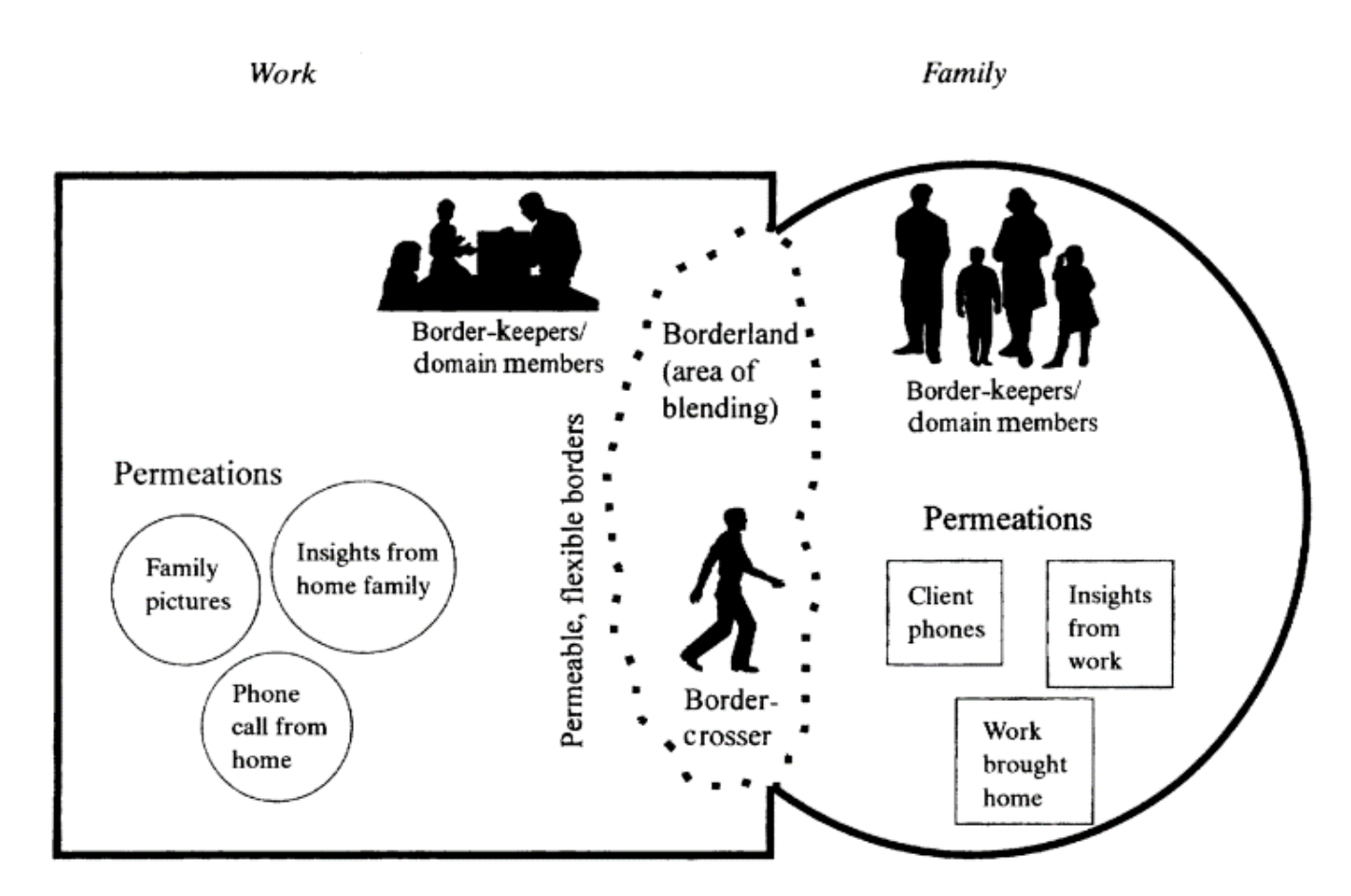
(Clarke’s border theory) - Build Your Support System: It turns out, the advice received was well-founded. Identify your support system before starting your program. Social support– from friends, family, and perceived support from your institution, can help you cope with graduate school stressors. Talking to close friends and family about the challenges you anticipate can help set them up for success when you inevitably need their support. Leading up to the start of my program, I had several open conversations with my partner and my parents about my concerns.
Since starting grad school, “strengthen your personal relationships” has stayed with me. Grad school can test your limits, but it can also be a time of personal and professional growth and deep connections. While at times challenging, pursuing a graduate degree is an incredible privilege. It is a chance to find purpose and passion in a future profession. As you move through the program, let your career goals ground you—and stay connected to the people who support you. Their presence isn’t just helpful; it’s part of what makes the experience meaningful.