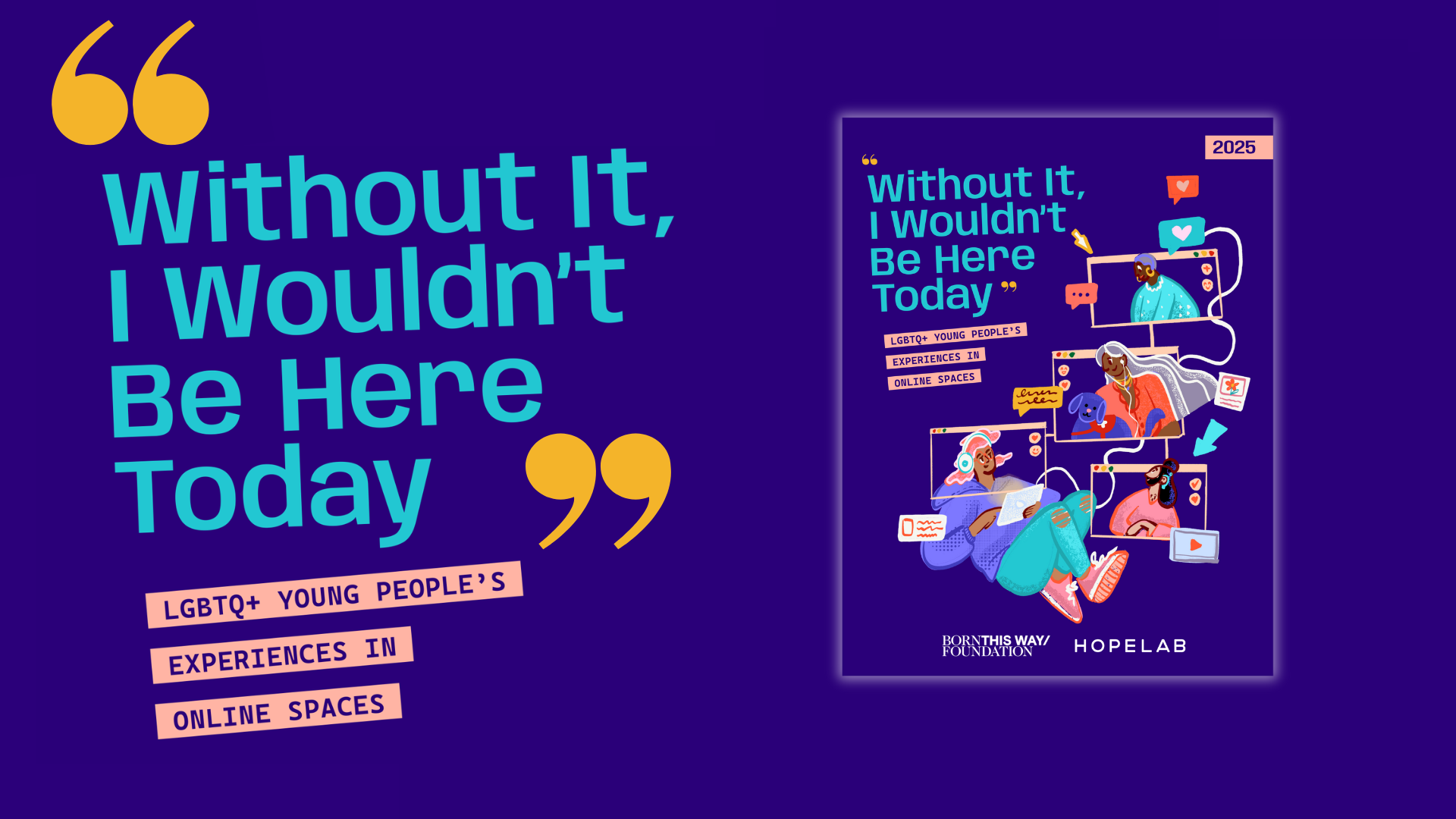



Born This Way Foundation, in partnership with Hopelab, Bard Early College, Centerlink, WeEmbodyLab, and Nebraska Evaluation & Center Research created a science-backed, youth-informed resource guide, Online Safety for LGBTQ+ Young People: Resources to Enhance Technology and Platform Responsibilities. LGBTQ+ young people turn to online platforms for resources related to mental health, making it imperative for tech leaders, trust and safety teams, and social media platforms to prioritize the safety and well-being of LGBTQ+ young people and co-create online spaces with them in mind.
This resource guide provides key statistics from our research report on LGBTQ+ young people’s experiences in online spaces, actionable strategies from focus groups with LGBTQ+ centers across the country, and key takeaways from discussions with LGBTQ+ young people and adult experts in the field.
Below are the key resources highlighted in the guide:
- Read Partnership on AI’s “Guidance for Inclusive AI” guides, which include best practices for developing inclusive AI and moderation systems that reduce harm to LGBTQ+ users.
- Developers should consider utilizing Perspective API, a machine-learning Application Programming Interface (API) created by Google, which scores comment toxicity in real-time. This may be useful for flagging abusive language directed at LGBTQ+ users.
- Social media companies should leverage CenterLink’s Community Center Directory and the Human Rights Campaign’s list of LGBTQ+ Professional and Student Associations to identify and partner with LGBTQ+ organizations to design policies that reflect lived experiences.
- Review GLAAD’s 2023 and 2024 Social Media Safety Index reports to gain insights into platform-specific safety ratings for LGBTQ+ users. These reports offer actionable recommendations for improving policies and content moderation.
- Learn from LGBT Tech’s expert research on how technology companies can help close the digital divide and make classroom technology safer for LGBTQ+ students. Technology companies should also support LGBT Tech’s advocacy efforts grounded in these findings, including public statements and policy filings that challenge homophobic and transphobic tech governance.
You can read the full report on LGBTQ+ young people’s experiences in online spaces to better understand the importance of online communities for LGBTQ+ young people.